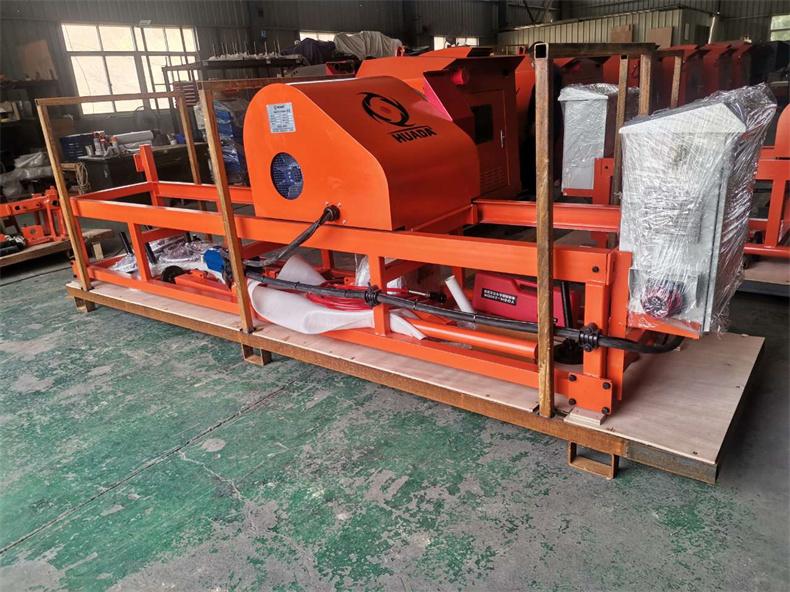

The diameter printed beside a circular blade describes the tool. Cutting depth describes a capability of the blade and machine working within an approved application. The numbers concern different things. Treating them as interchangeable can lead a buyer to order a larger blade while leaving the original capacity question unanswered.
A circle on paper is only the beginning
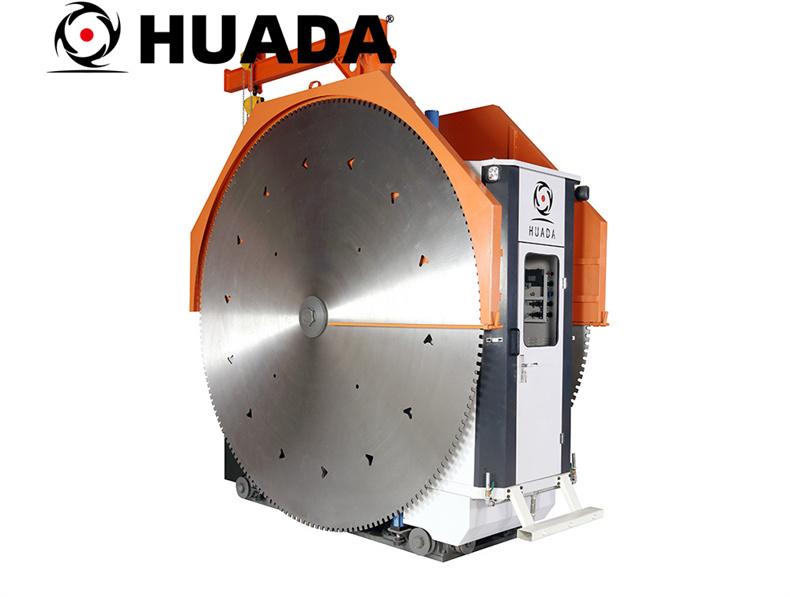
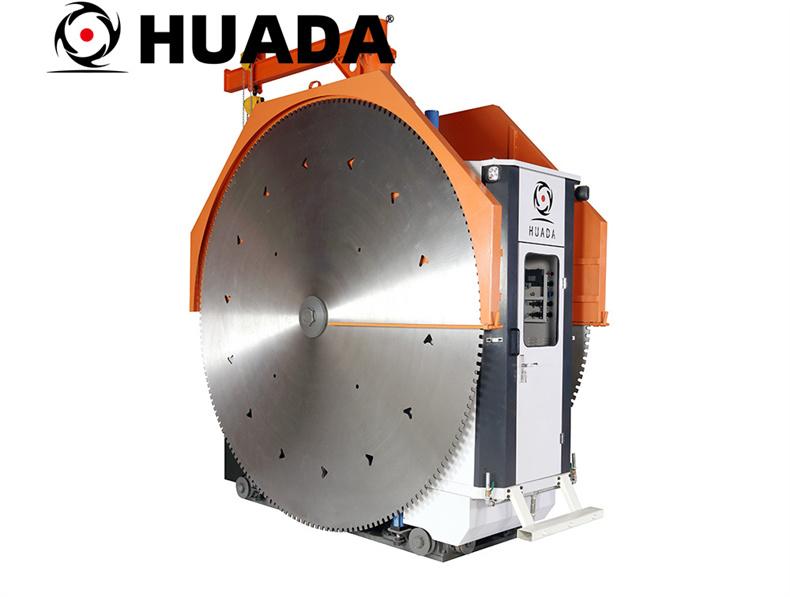
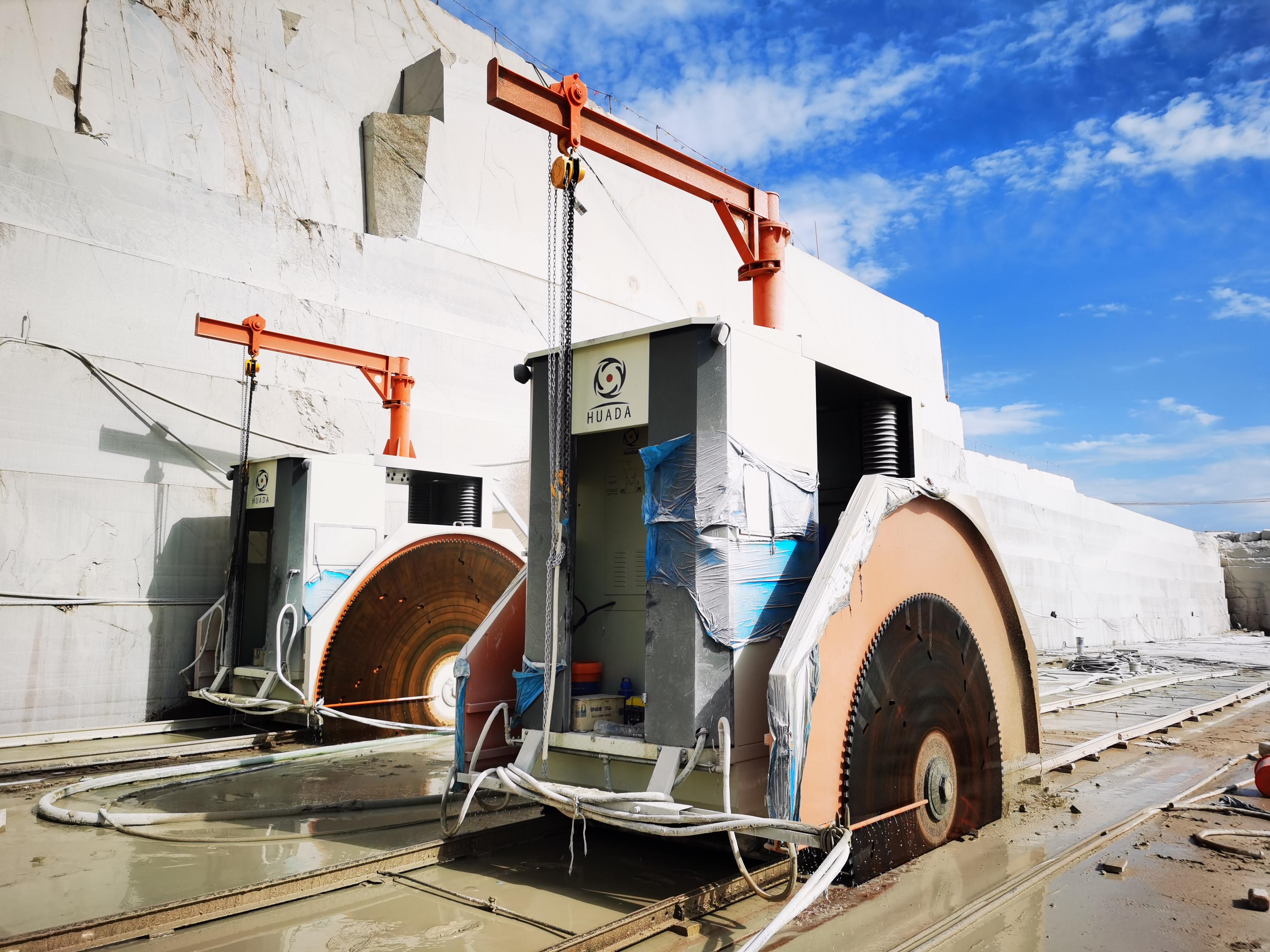
On a drawing, a circular blade has an outer cutting edge and a centre. It is tempting to turn that simple geometry into a depth estimate. An installed blade, however, is not an isolated circle moving freely through stone. Its centre is carried by the saw, and the surrounding machine occupies space that the workpiece cannot simply pass through.
The spindle assembly, supporting structure, protective enclosure and permitted machine movement all contribute to the usable cutting arrangement. Their relationship to the stone matters as much as the blade's outside dimension. A catalogue diameter therefore cannot establish a safe or achievable depth through a general geometric shortcut. The relevant capacity belongs to a particular machine configuration and cutting task.
Read blade dimensions as different attributes
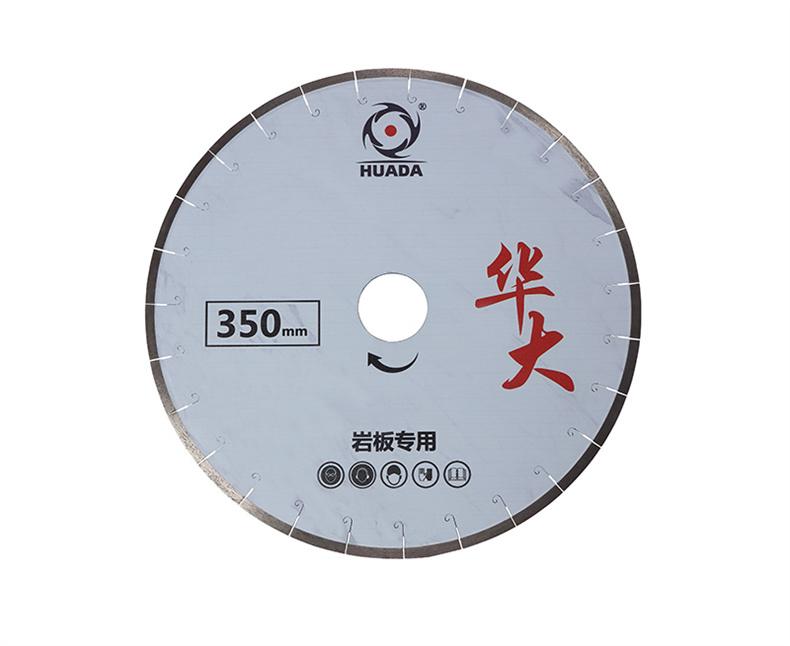
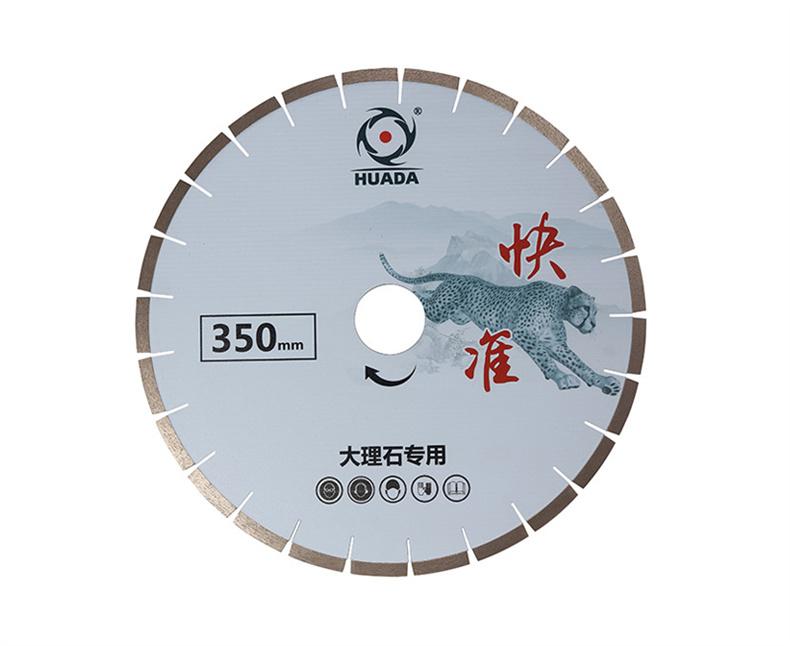
Huada's marble saw blade range separates diameter, bore and segment dimensions. These are distinct attributes, not alternative descriptions of depth. The diameter describes the blade's outer size; the bore describes its central opening; the segment dimensions describe the cutting elements. None is a standalone statement of the machine's cutting capacity.
- Blade diameter
- Identifies the circular tool size that the saw must be designed to accept.
- Segment height
- Describes a cutting-element dimension, not how deeply the saw can cut through a slab.
- Segment width
- Concerns the cutting element across the cut, not the vertical reach of the machine.
Reading the headings separately prevents a tall segment or a larger disc from acquiring an unsupported meaning in a purchasing discussion.
The machine contributes its own geometry
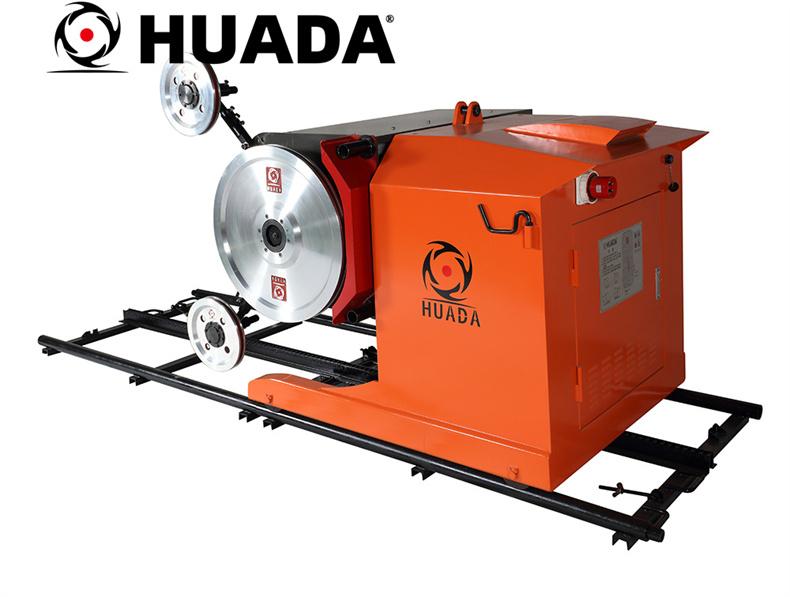
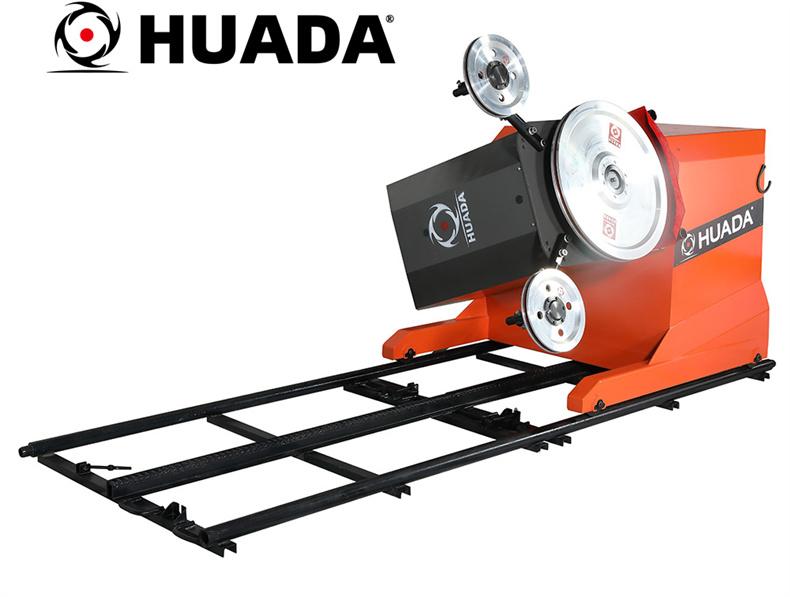
A saw's documentation may describe permitted blade sizes and cutting capacities separately because they answer different design questions. Blade acceptance concerns the tool within the machine. Workpiece capacity concerns the space and movement available for the intended work. Agreement on one dimension does not establish agreement on the other.
Cut orientation matters as well. A straight cut and an angled cut do not present the same spatial relationship between blade, head and slab. Even where a machine offers both, a capacity stated for one should not silently be assigned to the other. This is why an intended cut is more informative than a request for 'the biggest blade.' The manufacturer can evaluate the actual geometry against the specific machine, without a buyer inventing a depth from the disc alone.
A larger catalogue option is not a machine upgrade
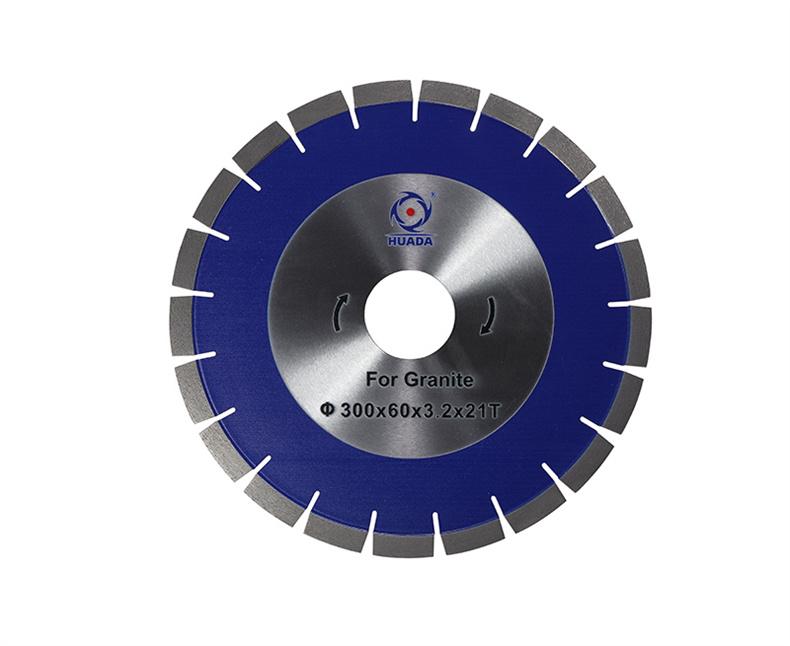
Huada's granite blade family contains several diameter options for bridge saws and small cutting machines. That breadth serves different equipment and work requirements. It does not mean every saw can accept every diameter in the family, or that moving upward through the catalogue automatically increases the capacity of an existing machine.
Consider a hypothetical factory asked to process thicker work. The purchasing decision has two possible scopes: obtain a suitable consumable for the existing saw's documented capability, or assess whether a different machine capability is required. A larger blade order cannot settle which scope applies. Resolving the capacity question first keeps the consumable purchase attached to a feasible job, rather than treating a blade dimension as a substitute for machine engineering.
Equal diameters can belong to different cutting jobs
Two blades with the same outside dimension may be intended for different materials. Huada separates marble, granite and engineered-material blade families. Its engineered stone blade information also distinguishes segment-width alternatives within a common diameter. Diameter equality does not erase those differences.
Material suitability remains a separate question from available depth. A blade may fall within a machine's dimensional range while still requiring evaluation for the intended stone and edge requirement. Conversely, a material-specific blade may be appropriate for the stone but unavailable in a configuration suitable for the installed machine. Both conditions must be satisfied; neither can compensate for the other. The useful comparison keeps tool size, material application and machine capacity visible at the same time.
Describe the job so the depth answer has meaning
A factory asking about capacity can describe the material, workpiece geometry, intended cut orientation and exact saw configuration. The question then becomes whether that identified machine and approved blade combination can complete that defined work. The response should distinguish a documented capacity from a proposed application requiring further assessment.
This framing also makes competing offers easier to compare. One supplier may be discussing blade availability while another is discussing an entire machine configuration. Without that distinction, both may appear to answer the same depth question. Once the scope is clear, the blade diameter resumes its proper role as one tool attribute within a complete cutting arrangement. The final capacity statement comes from the appropriate machine documentation and application review, not from arithmetic applied to a photograph or catalogue diameter.