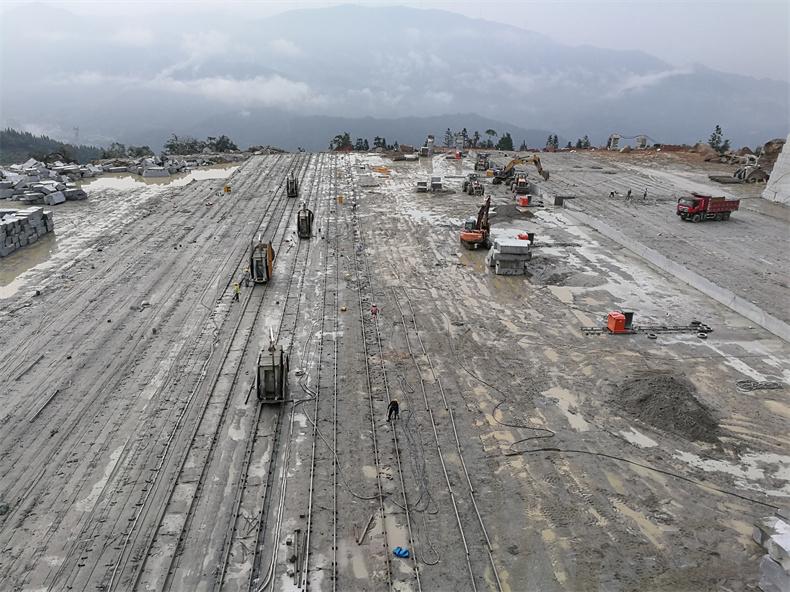

The archived material note describes granite as an igneous rock formed when magma condenses below the surface, with feldspar and quartz as its main constituents. It then connects several physical properties to decorative-stone use.
- Water absorption
- The stated general range is 0.15%–0.46%.
- Porosity
- The article gives a general range of 0.3%–0.7% and associates the small gaps with good frost resistance.
- Hardness and density
- Granite is placed at about 6 on the Mohs scale, with density between 2.63 g/cm3 and 2.75 g/cm3.
- Strength
- Compressive strength is listed as 100–300 MPa, with fine-grained granite above 300 MPa, and bending strength as generally 10–30 MPa.
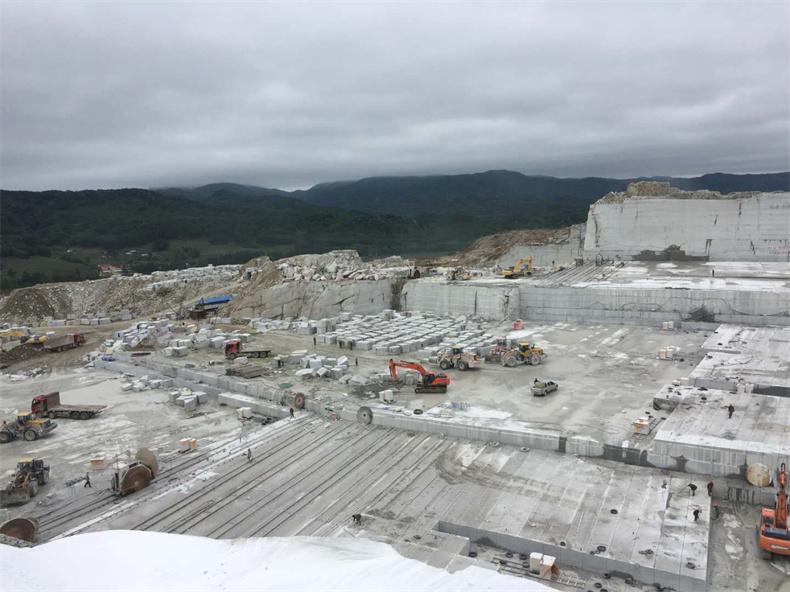
Grain structure and durability
The source identifies fine, medium and coarse granular structures as well as porphyritic granite. It describes the internal structure as compact and chemically stable, with good durability and frost resistance, while noting poor fire resistance.
These are broad material statements. A named granite can vary with its mineral composition, fabric, fissures and test method; the archived ranges are not a quarry-specific laboratory report.
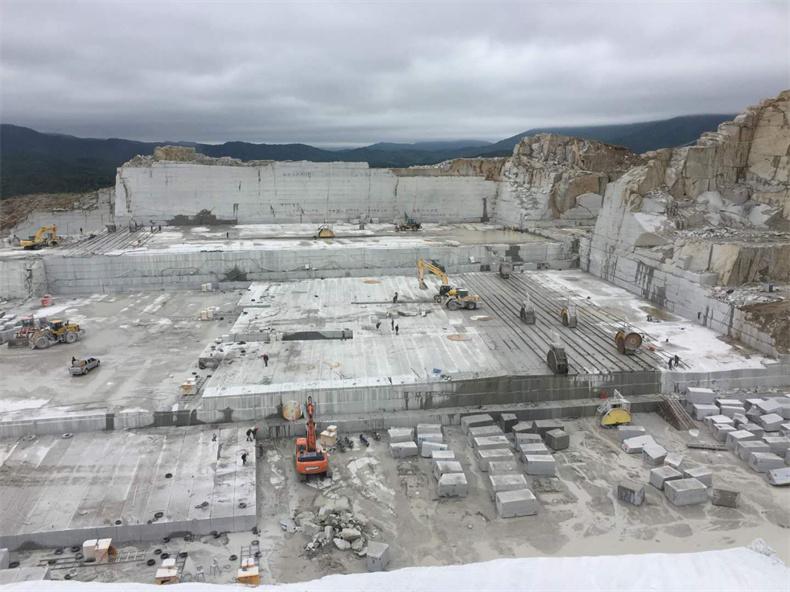
Use as facing stone
High surface hardness, the ability to be processed and joined into slabs, and resistance to weathering are given as reasons granite is used for exterior decoration and higher-end building walls. Selection still depends on the finish, fixing design and tested material supplied for the project.