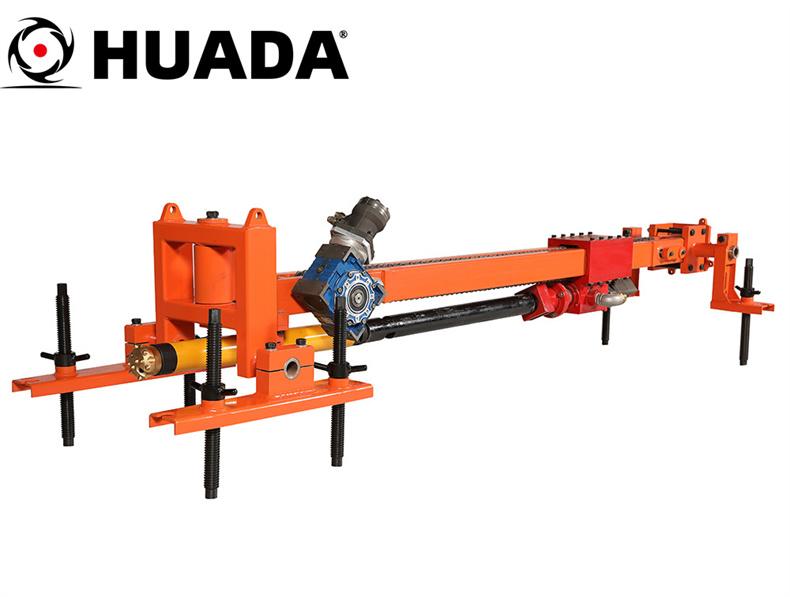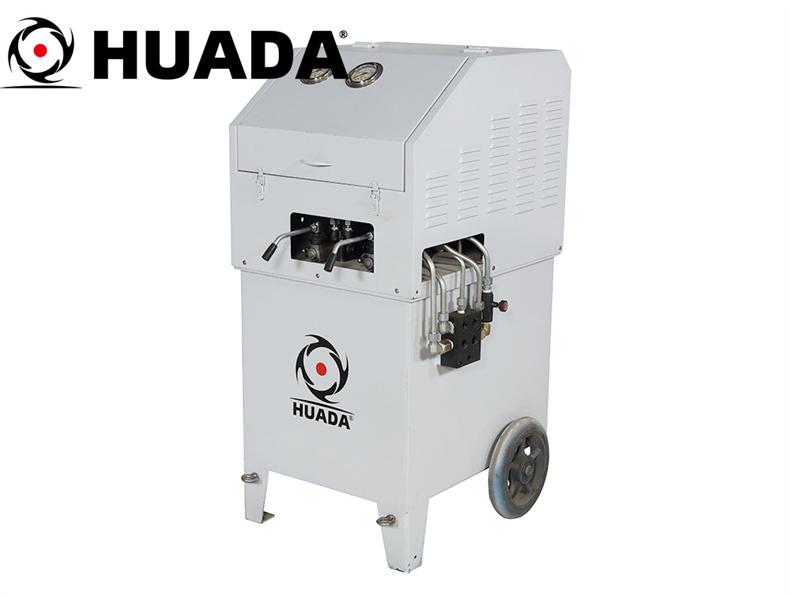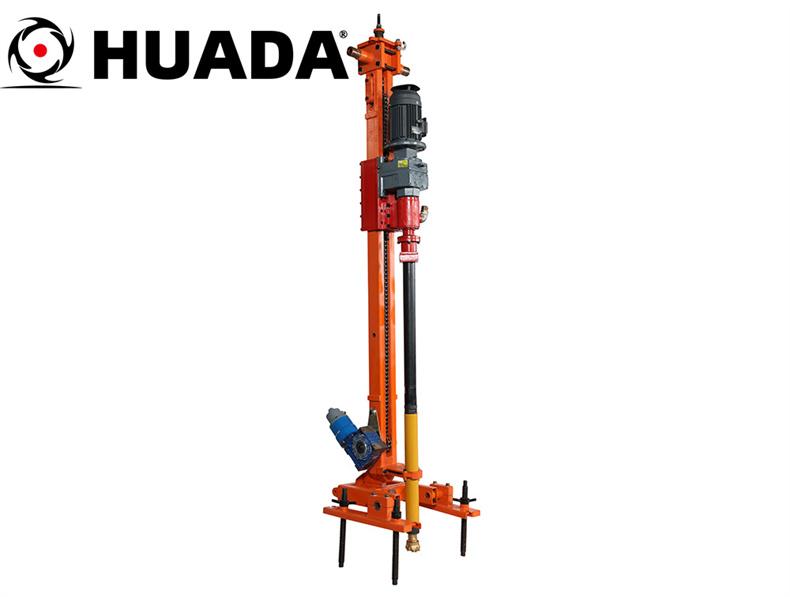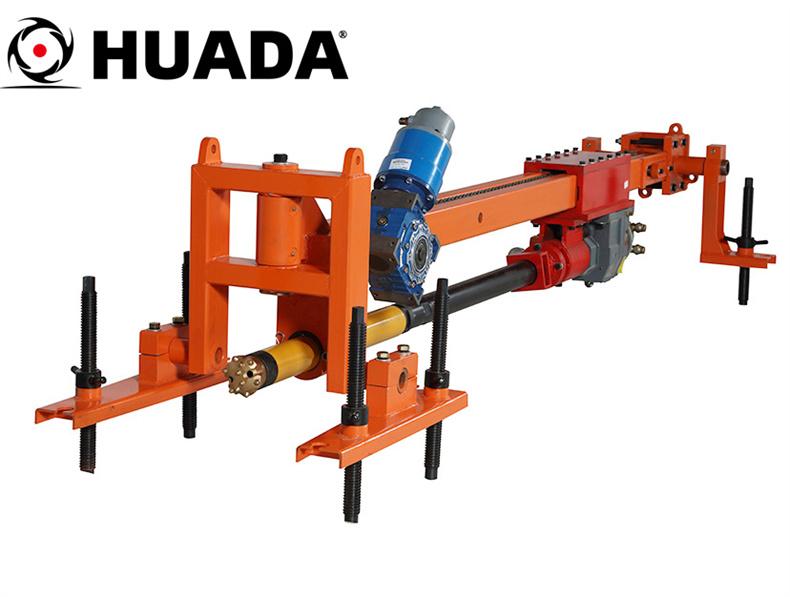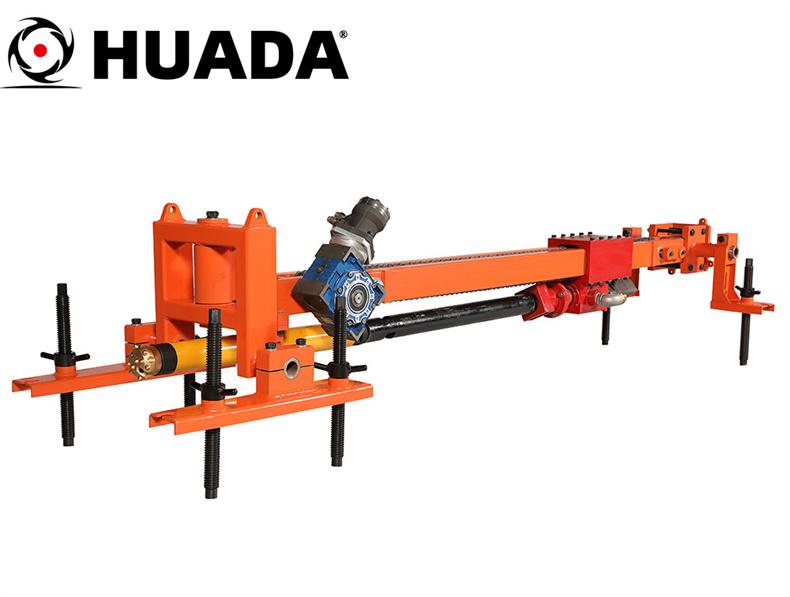

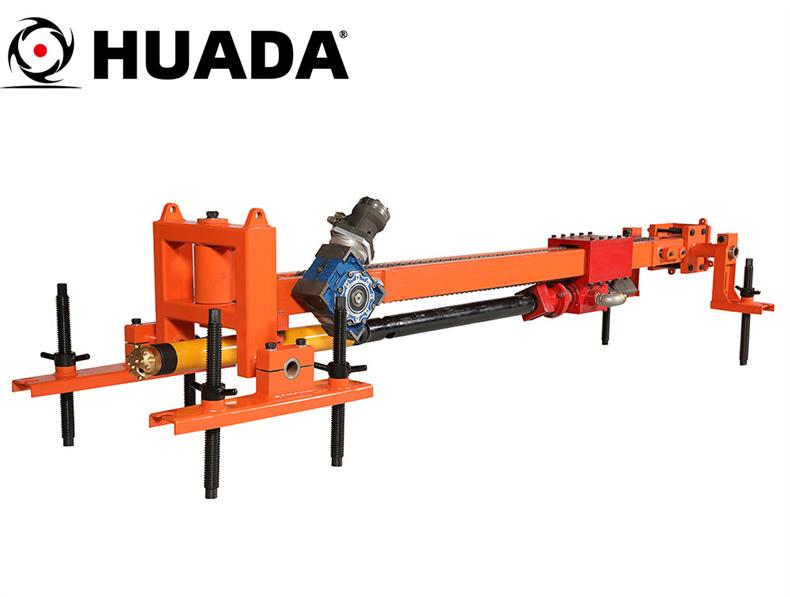
DTH90-P uses compressed air for both rotation and feed. It covers Ø65–90 mm holes and is listed for sites where an all-pneumatic drive is preferable to bringing an electric or hydraulic rotary supply to the drill.
Air supply is the central selection check
The specification calls for 12–14 m³/min at 0.5–0.7 MPa. That air figure is higher than the pneumatic-electric DTH90-E entry, so the compressor, hose diameter, hose length and elevation losses should be checked as one system. The supply needs to support the drive, DTH hammer and flushing at the working face.
DTH90-P specification anchors
- Product model: DTH90-P
- Hole diameter: Ø65–90 mm
- Maximum drilling depth: 35 m
- Feed rate: 6–8 m/h; stroke: 1 m
- Pneumatic rotary source and pneumatic feed source
- Equipped drill rod: Ø73 × 1000 mm
- Recorded machine weight: 500 kg
Fit the mounting to the hole direction
Multiple fastening points support relocation, while the articulated head connection is intended for vertical, horizontal and inclined holes. Set the base and guide alignment from the required hole direction before applying feed. If straightness changes, inspect mounting, rod condition, bit/hammer match and air delivery before increasing pressure.
What to verify during the first holes
- Measure air pressure at the drill while it is working.
- Record penetration by rock layer and note flushing quality.
- Check collar position, direction and finished-hole straightness.
- Inspect rod connections, hammer and bit at planned intervals.
- Confirm that relocation and rod release can be performed safely in the available space.
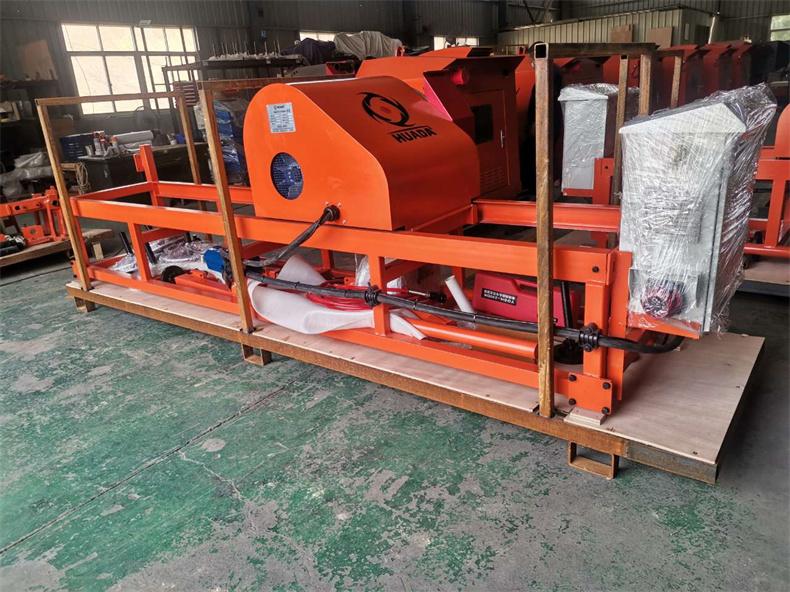
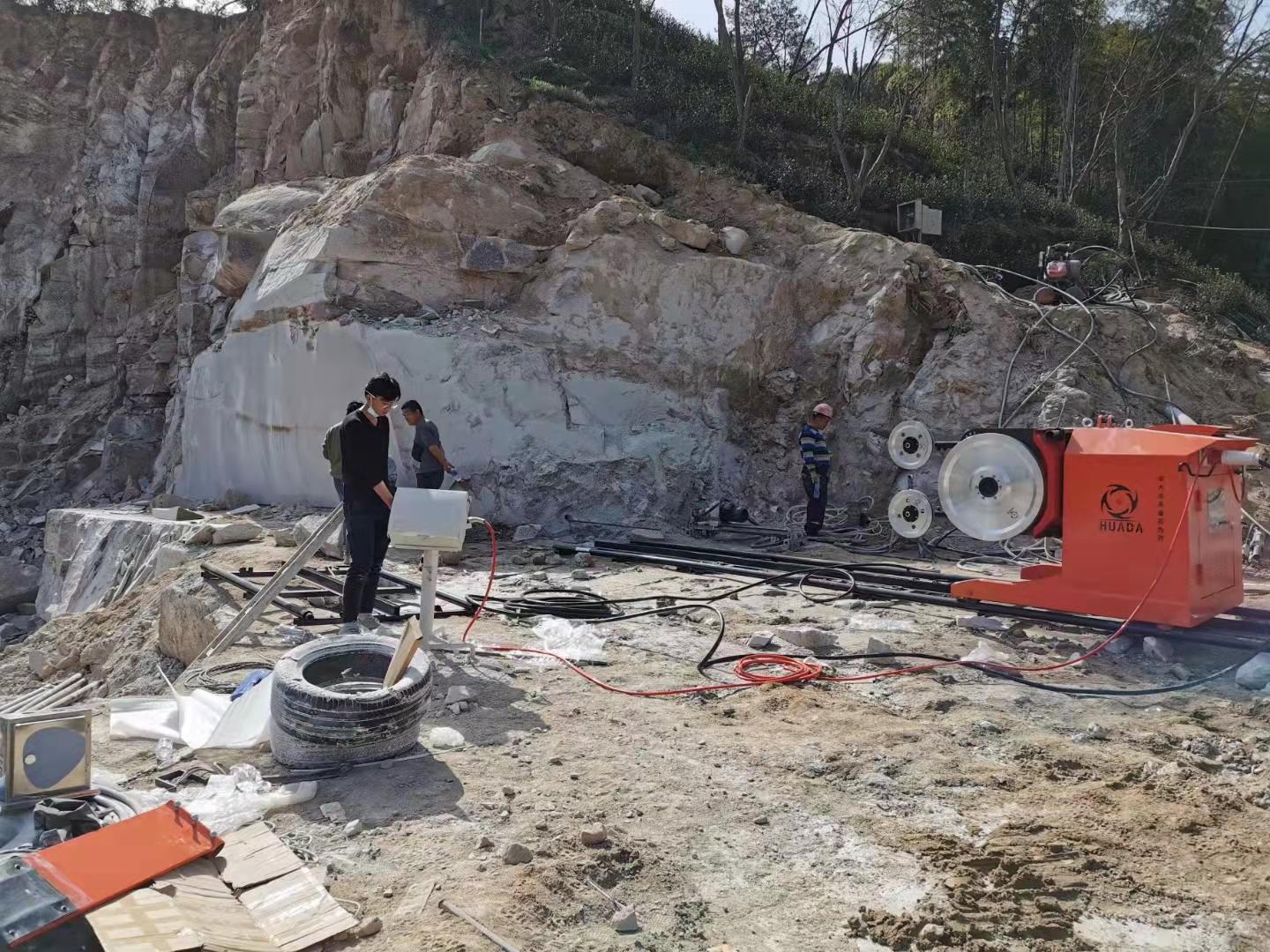
Original product images