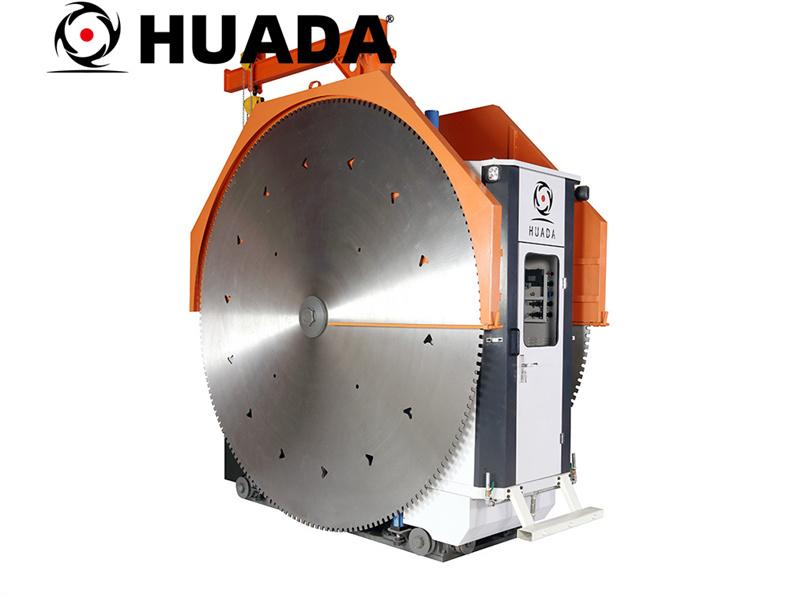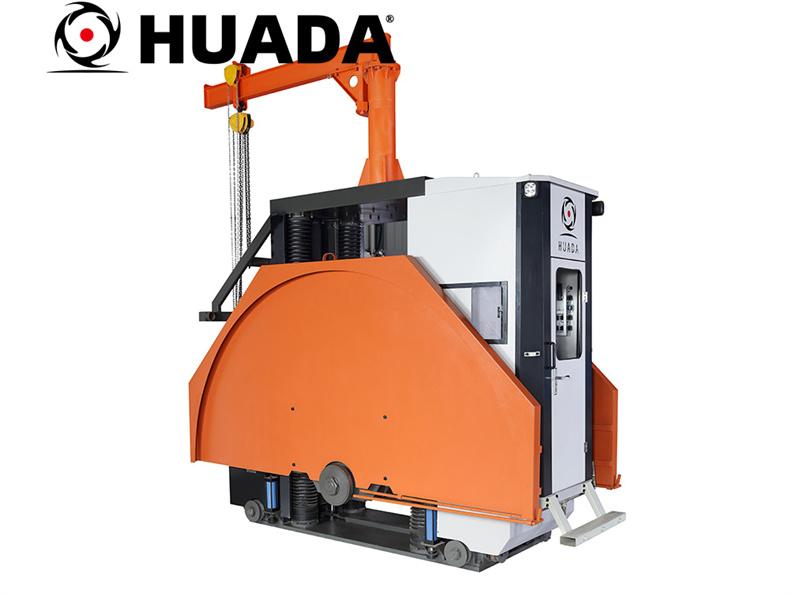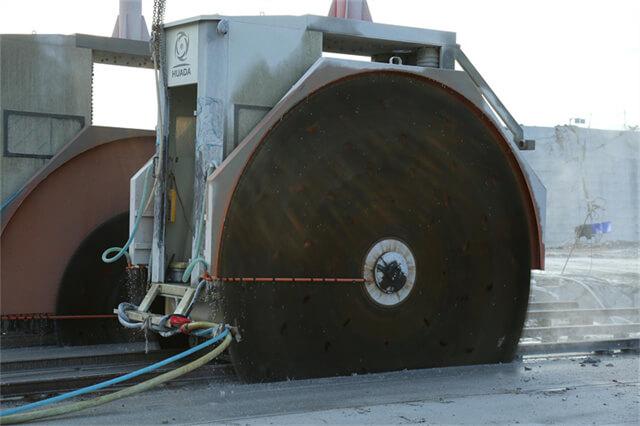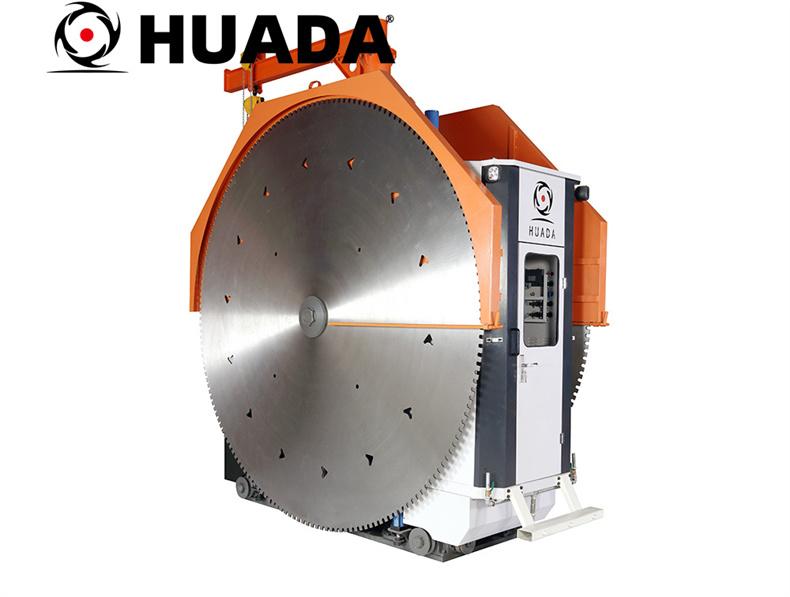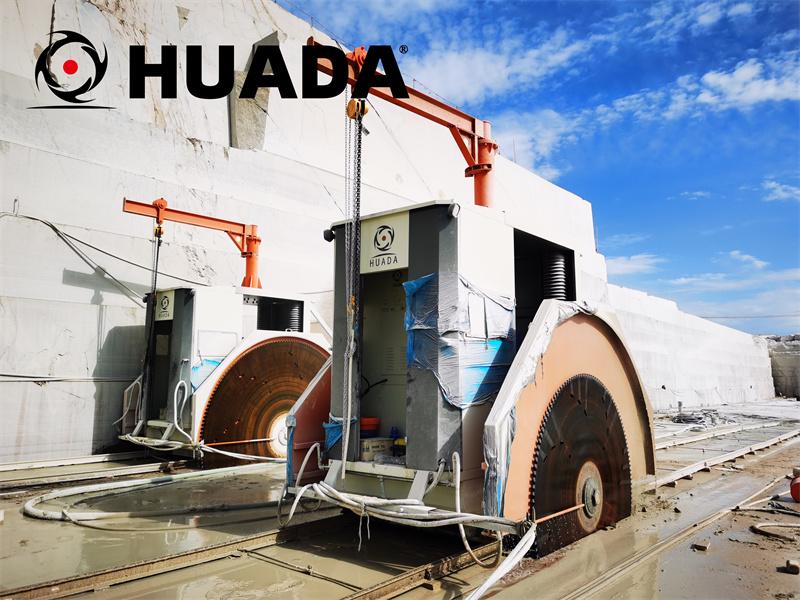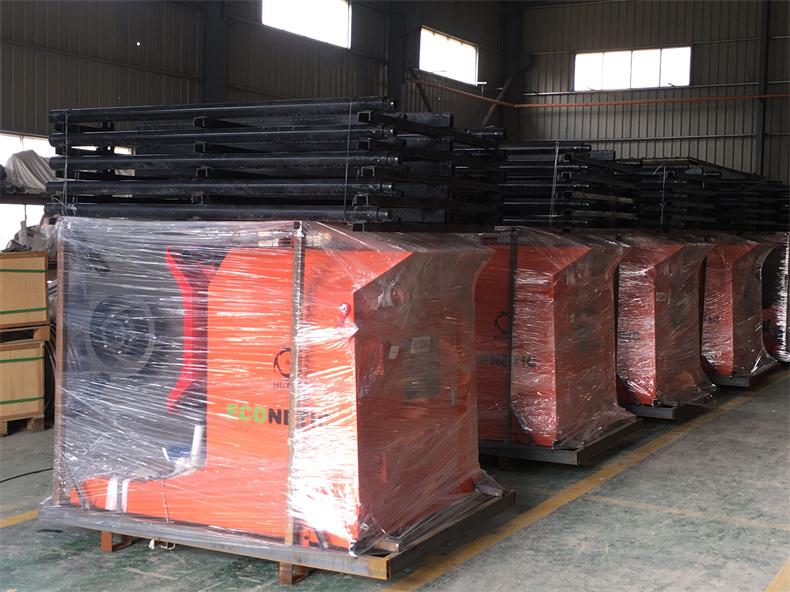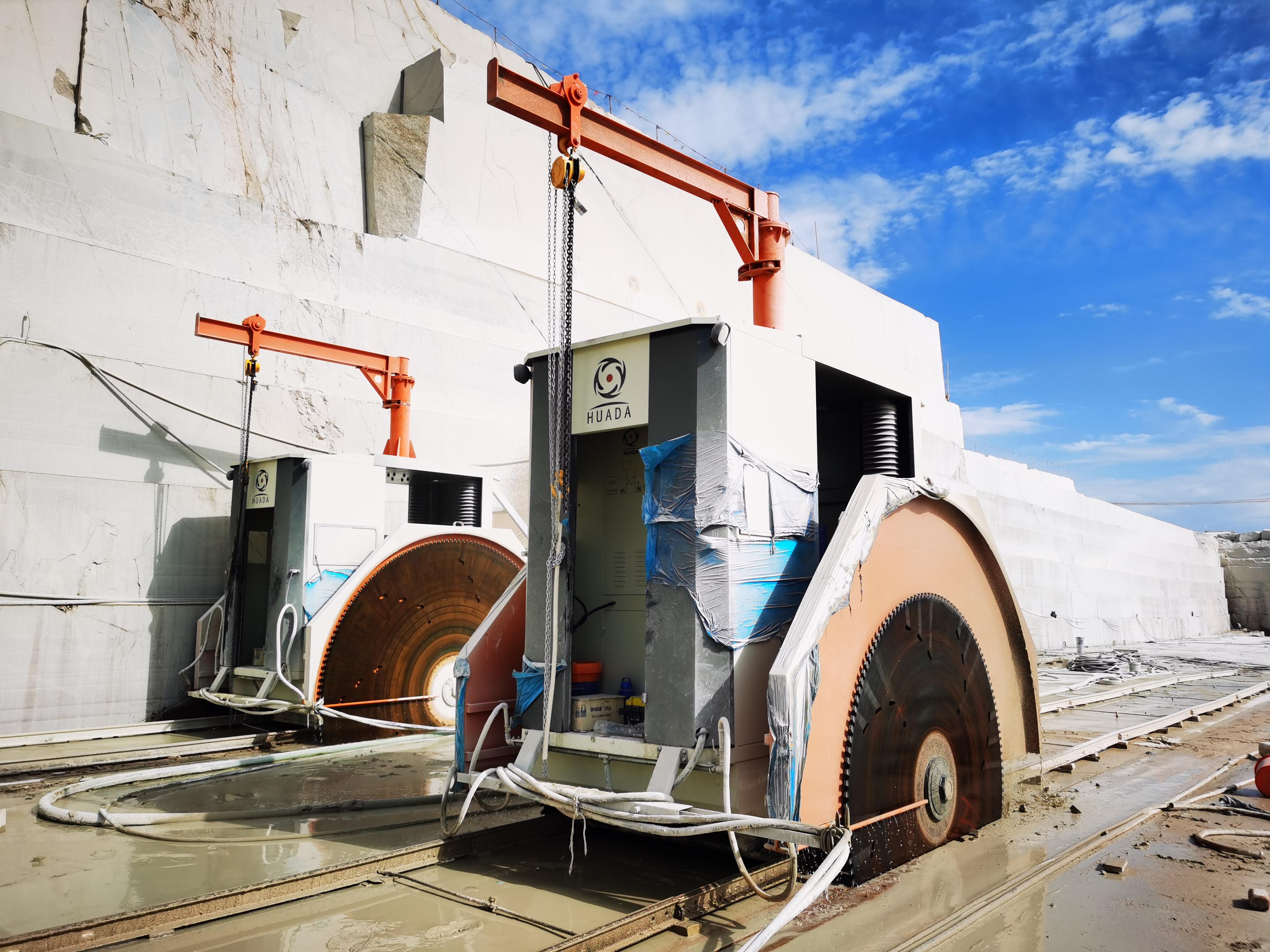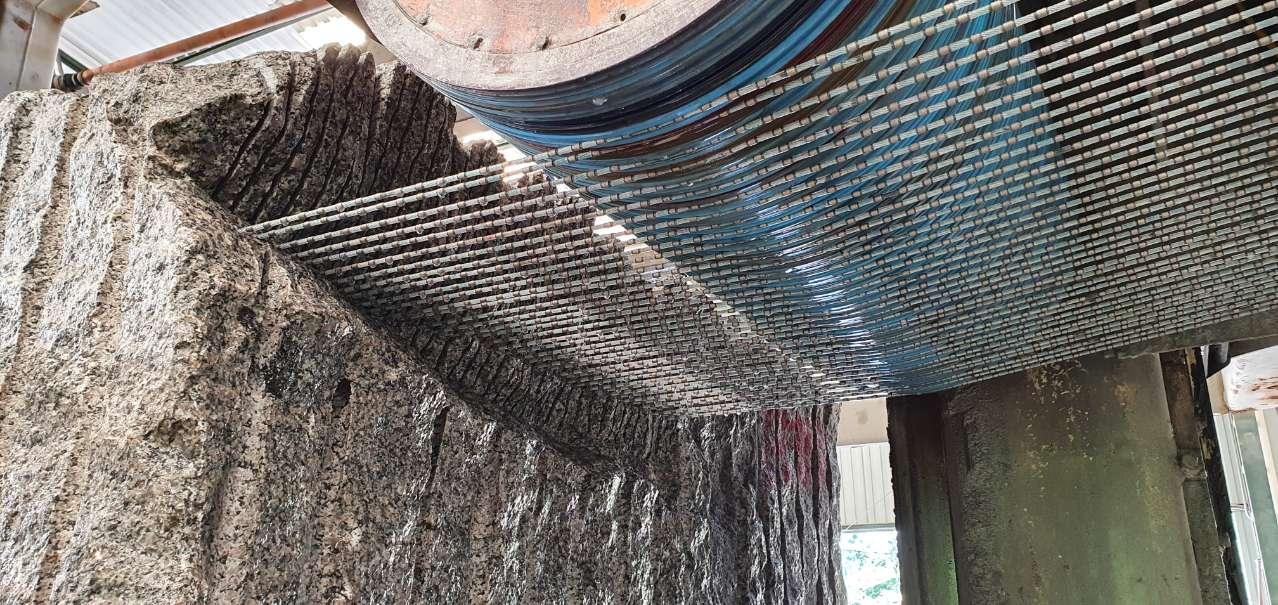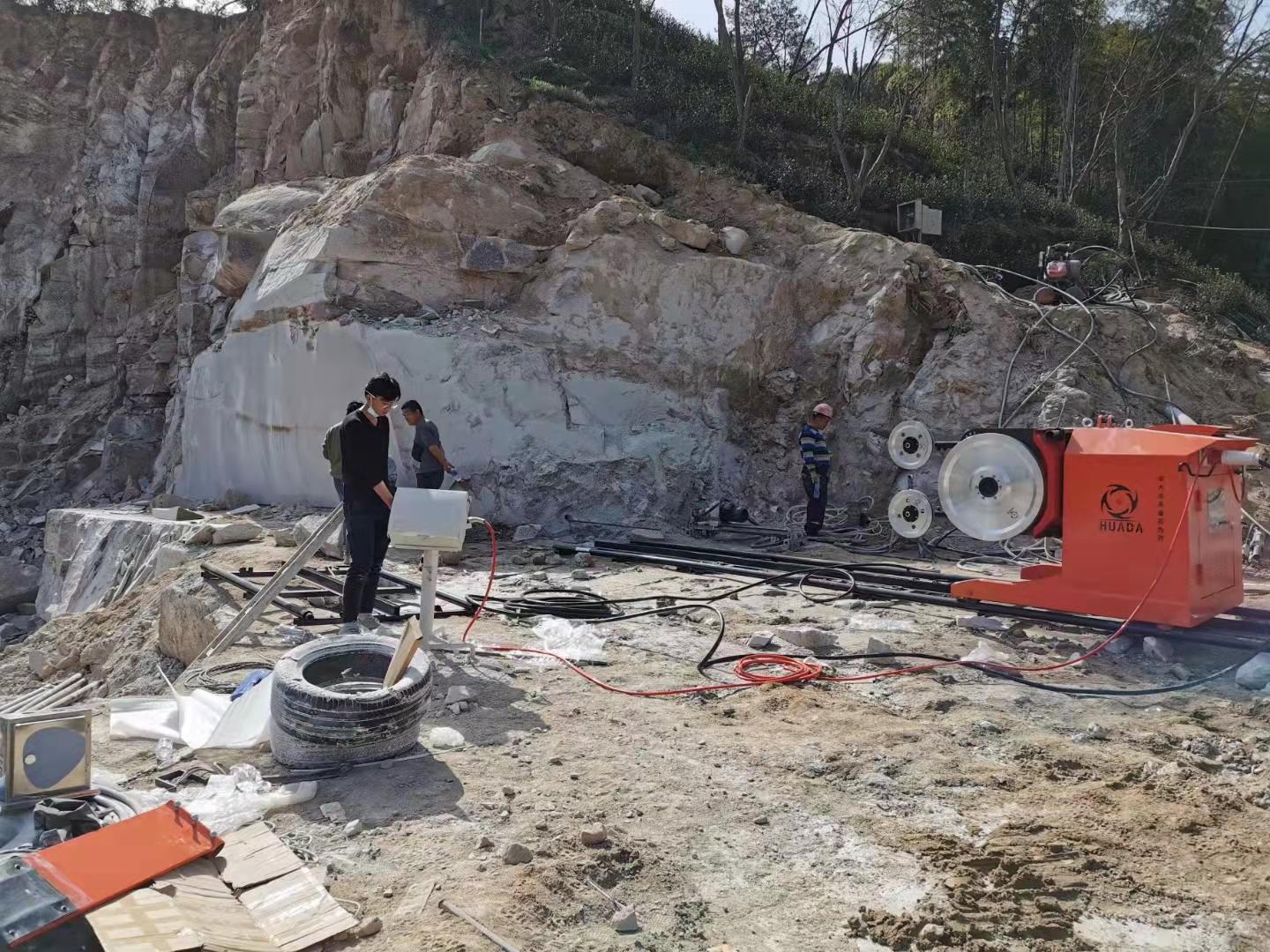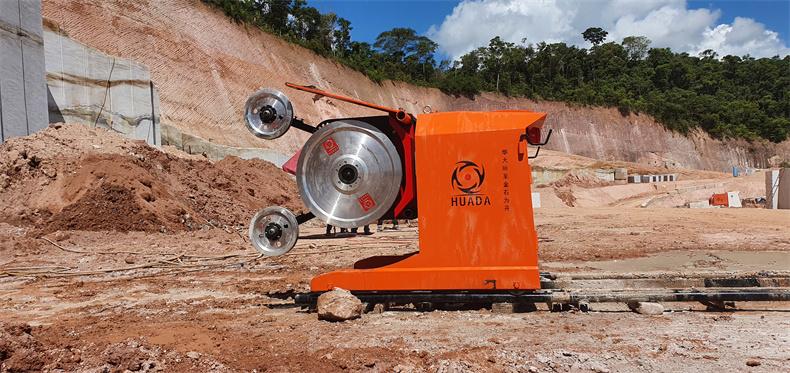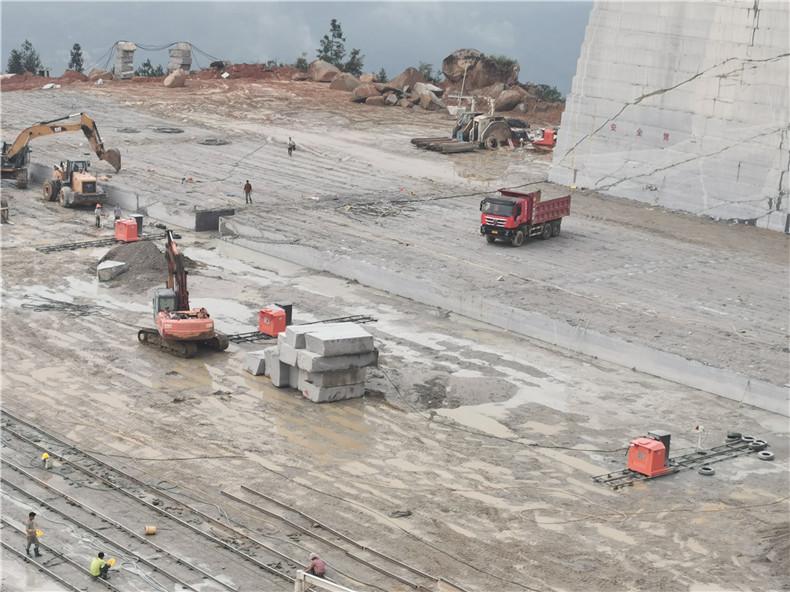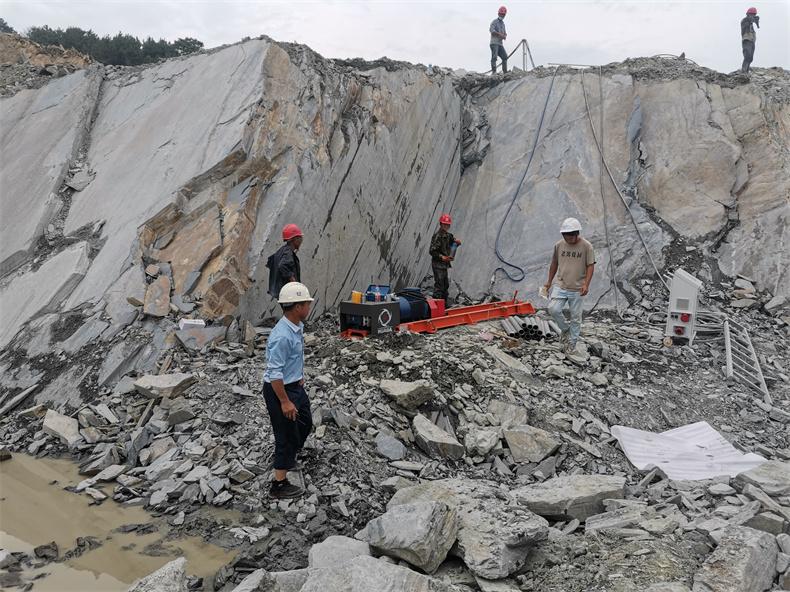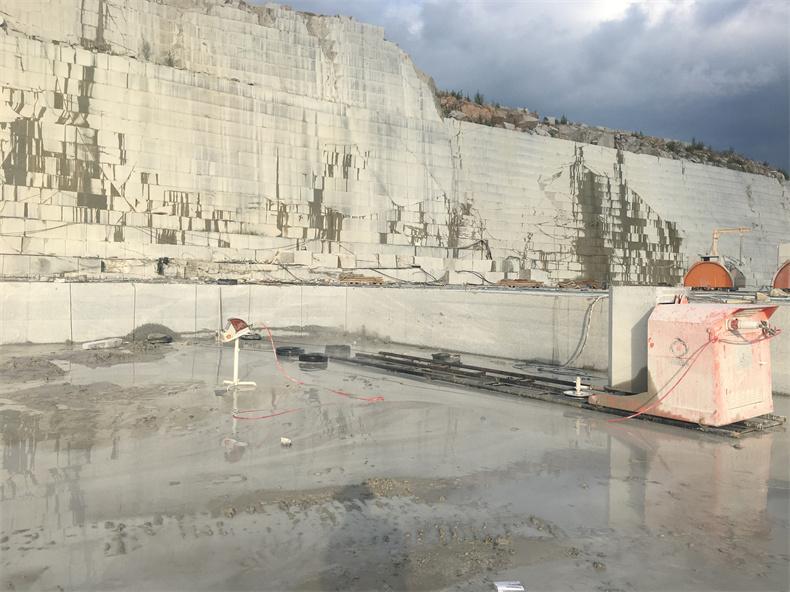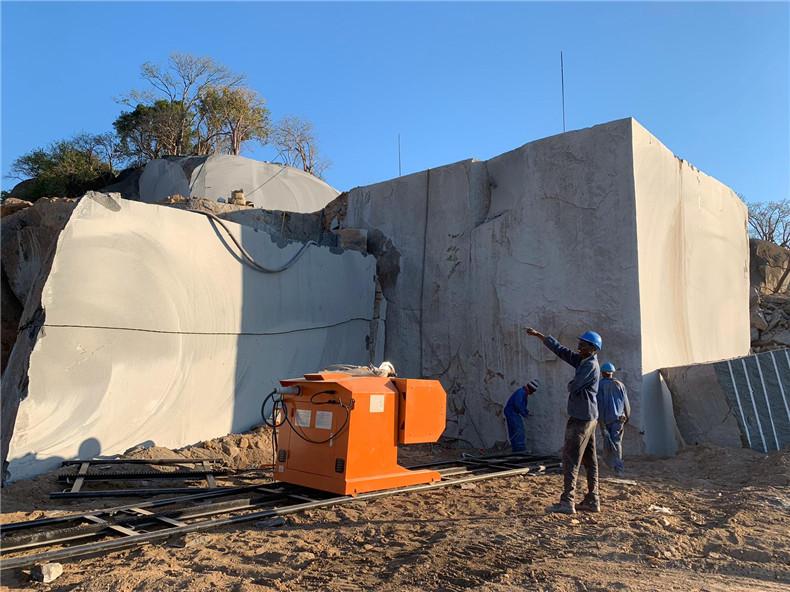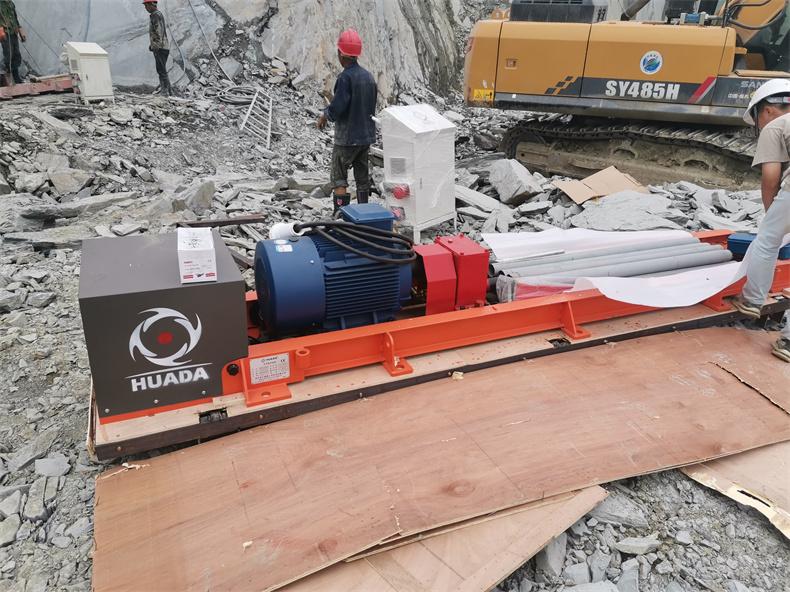

This Econetic double-blade page combines hard-rock and soft-stone quarry contexts. The old text names steep, horizontal and small-dip ore bodies, and adds a ≥10 m rock-layer condition for soft stone.
Resolve the natural-stone category first
The source discusses granite sawing and soft-stone sawing on the same page. Provide the stone and ore-body section, including layer thickness where relevant, before choosing a frame. It also contrasts mechanised sawing with rock drilling, expansive agent and air-bag separation, but publishes no site comparison data.
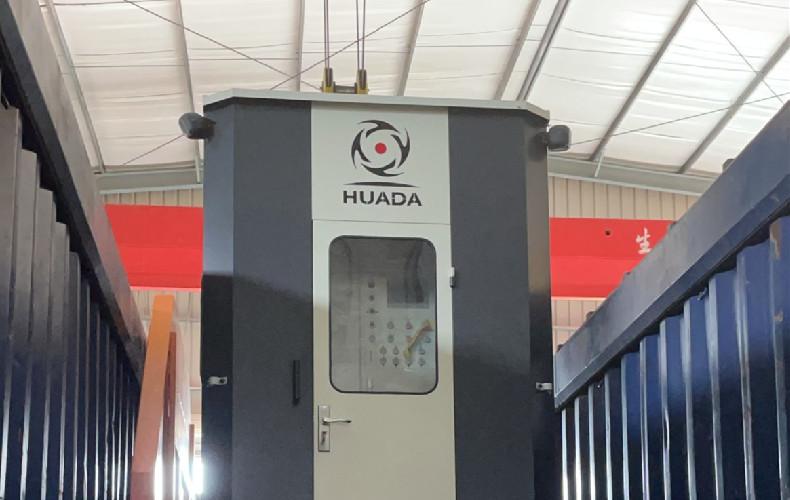
Econetic controls and range
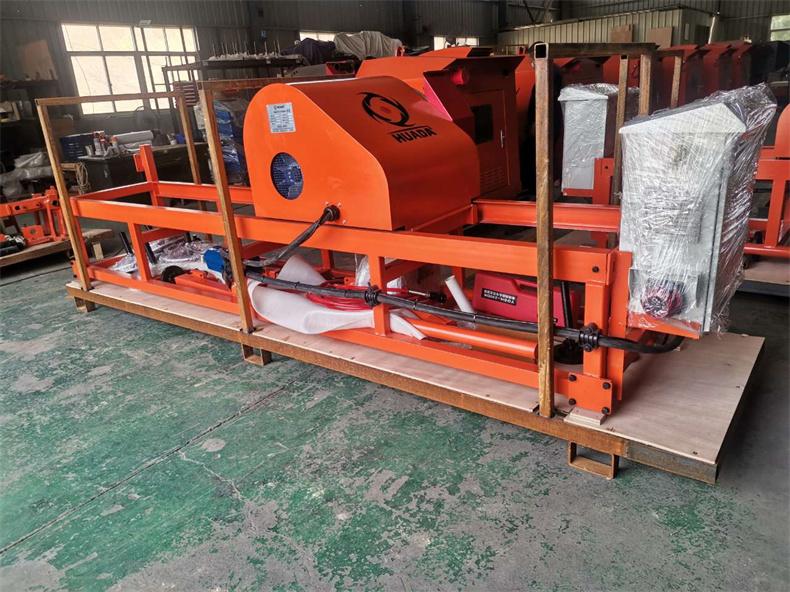
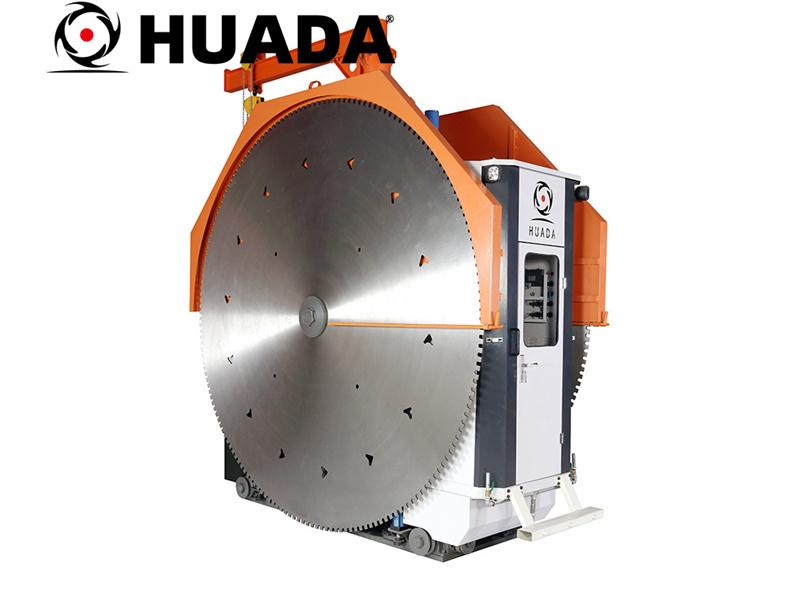
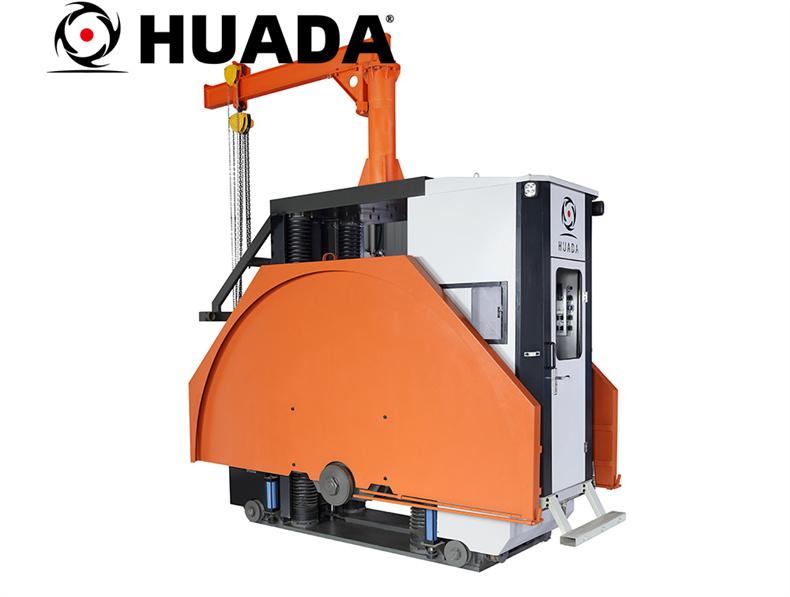
PLC/frequency-converter protection is stated to stop for blade jamming or nipping. Three inverters vary walking speed with harder or softer material, and blade motors use frequency control. Four frames cover 1360–3100 mm width, 1550 or 1850 mm depth and 1140–2200 mm track spacing. Each row lists two 75 kW motors, 158 kW total power and 5 m³/h water.
Natural-stone quarry brief
- Stone sample and ore-body orientation/layer
- Existing mining method and target block
- Exact frame, blade range and track foundation
- Power, water, dust and voltage conditions
- Protection/adaptive-speed and acceptance-cut tests
Ask the electrical list to identify supplied branded components rather than relying on the general source statement alone.
Original product images