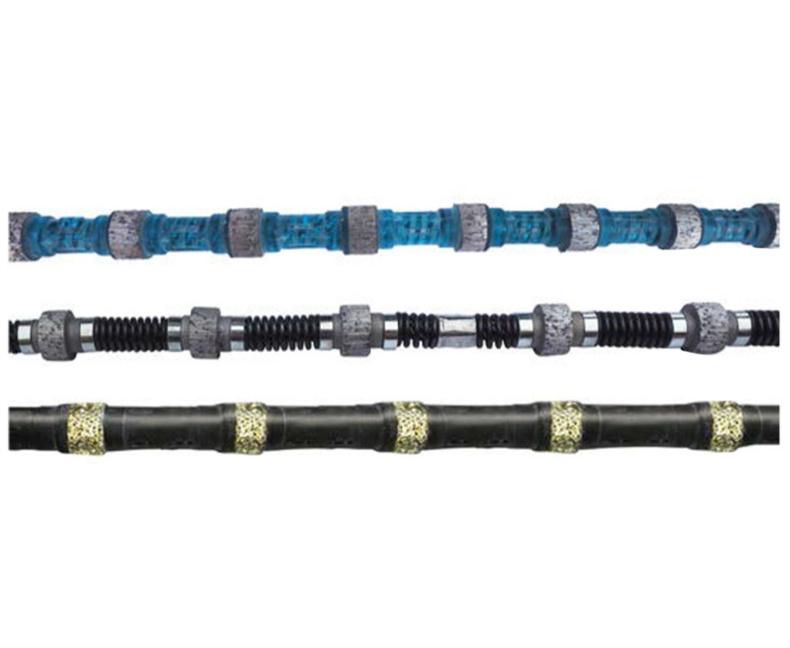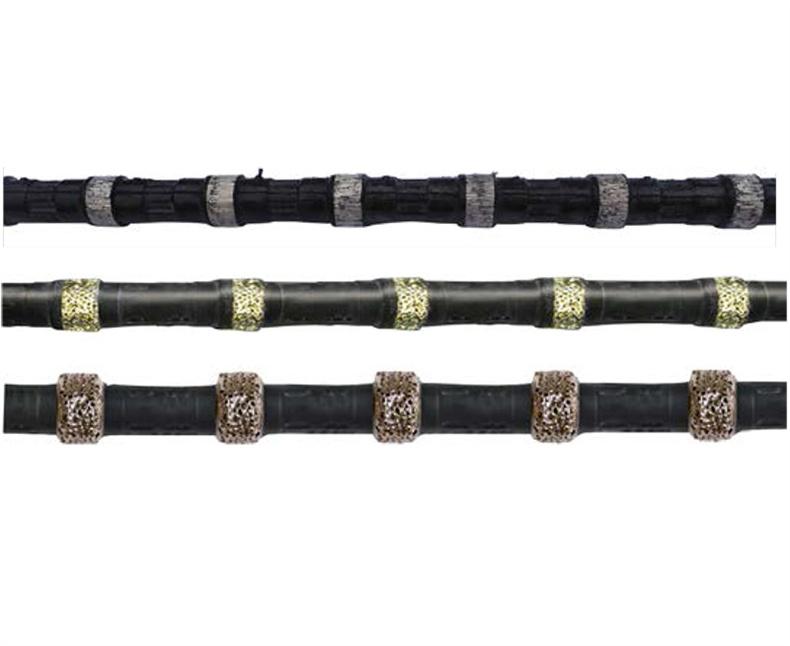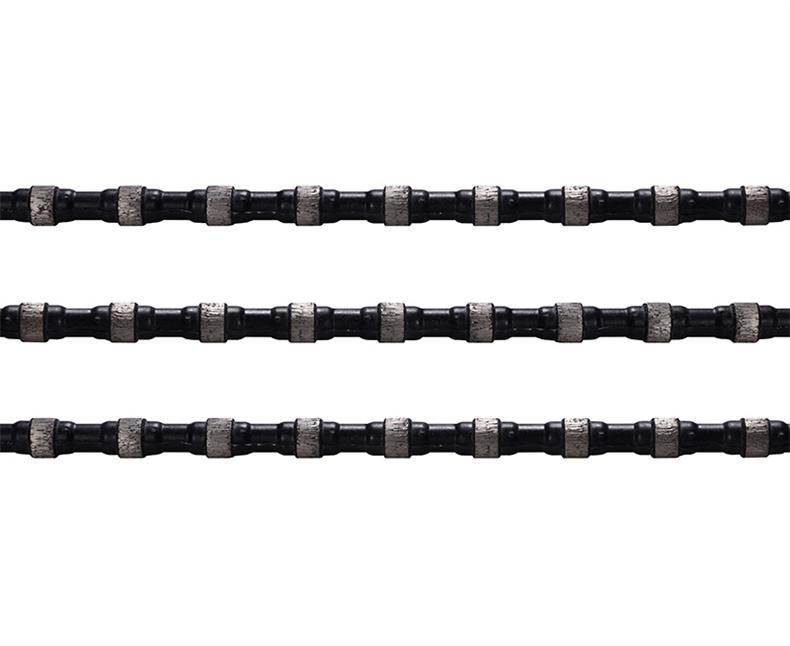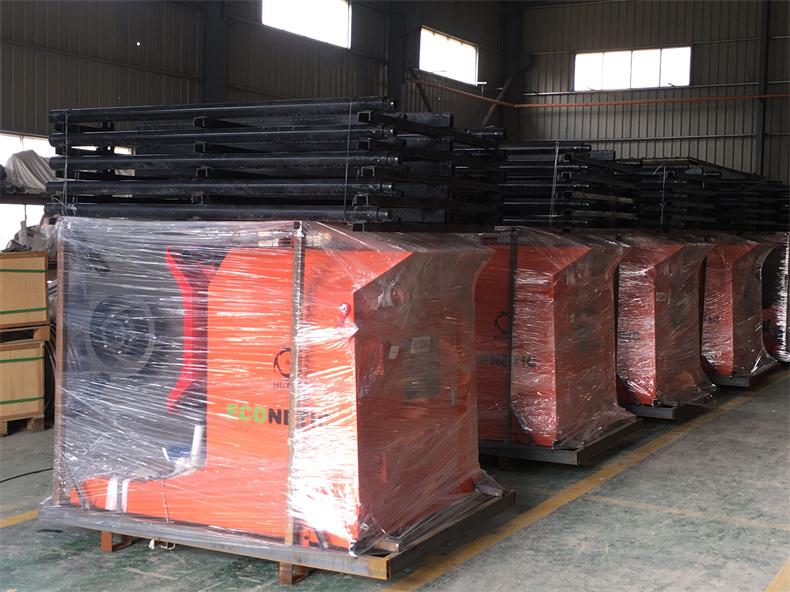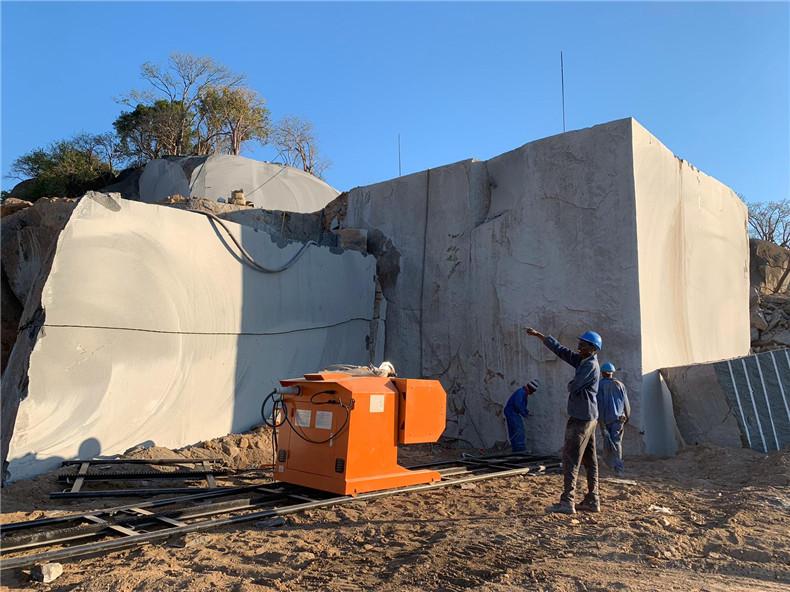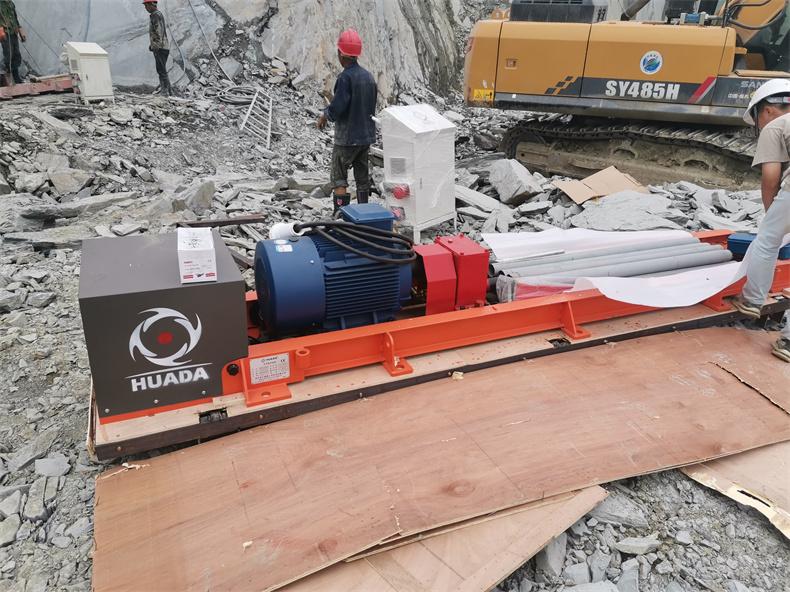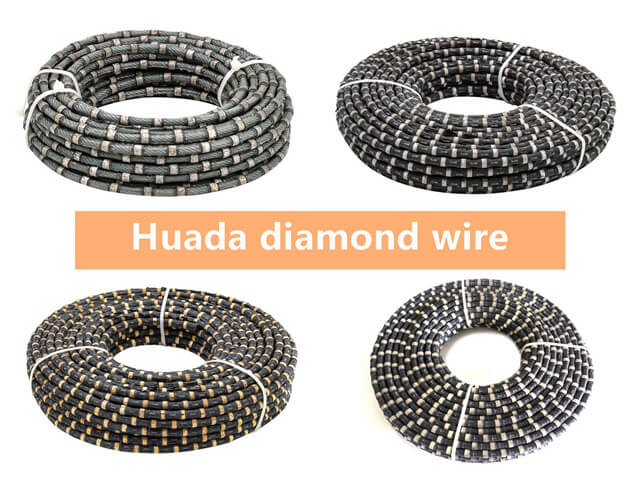

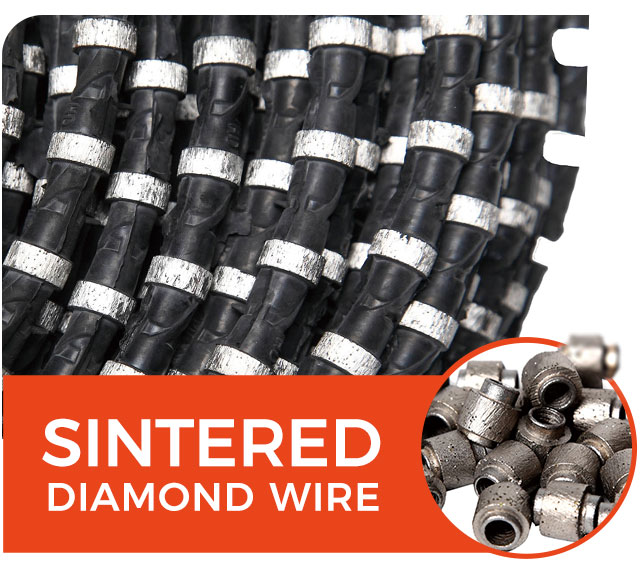
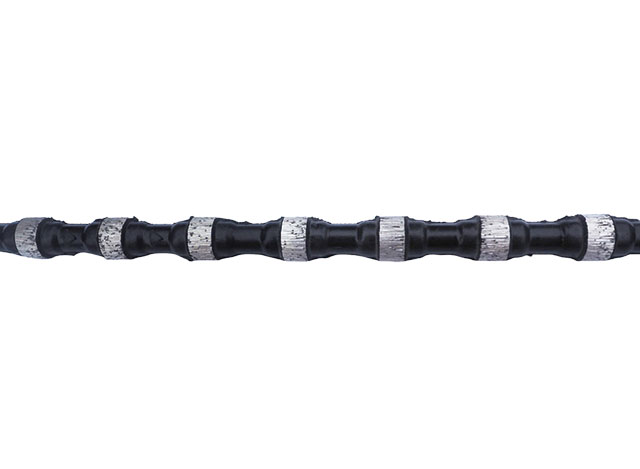
This page identifies a sintered diamond wire, but its saved application text and parameter table focus heavily on construction and demolition materials. Stone processors should therefore confirm the exact stone-specific construction instead of relying on the title alone.
Separate the stated applications
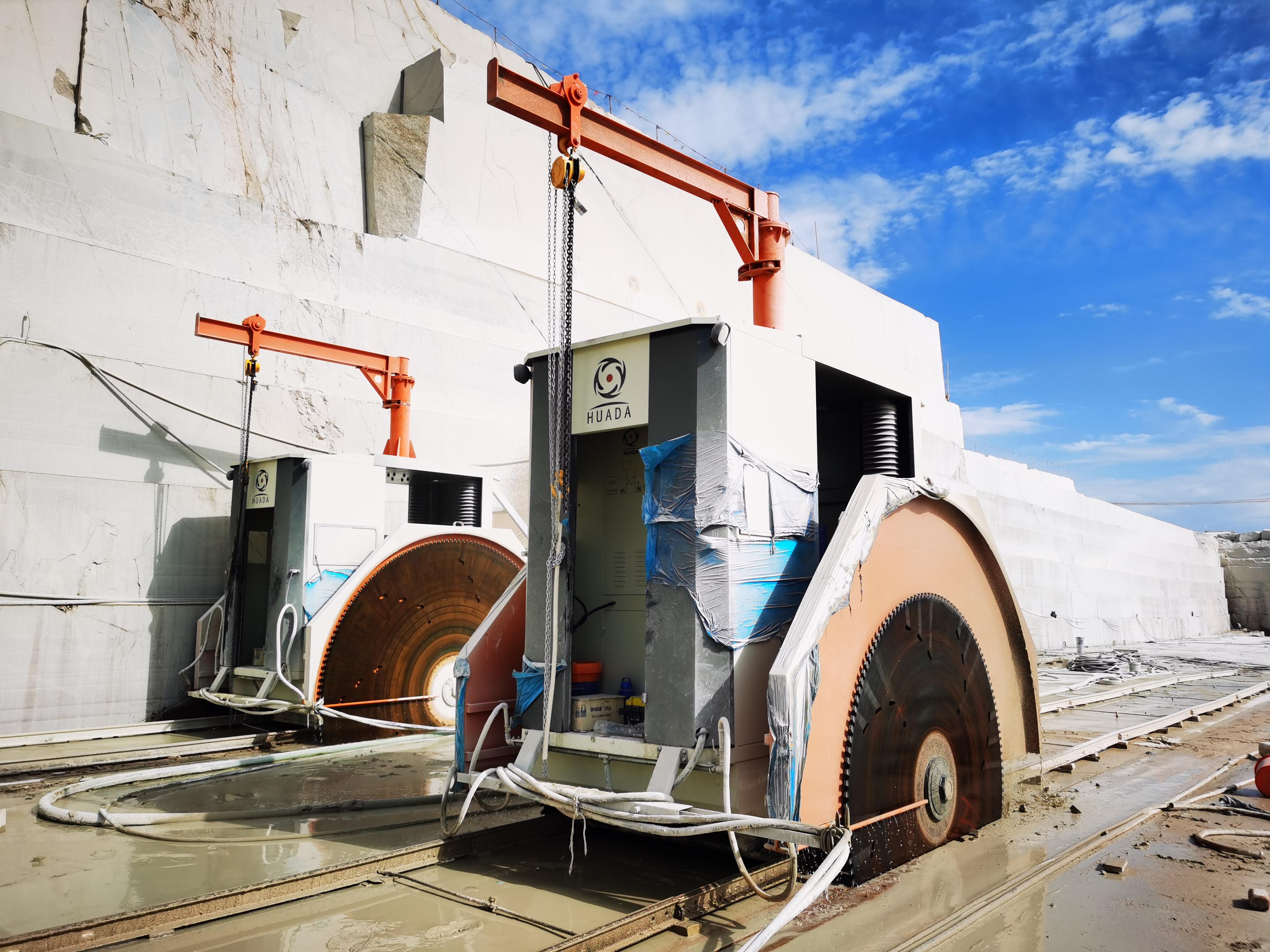
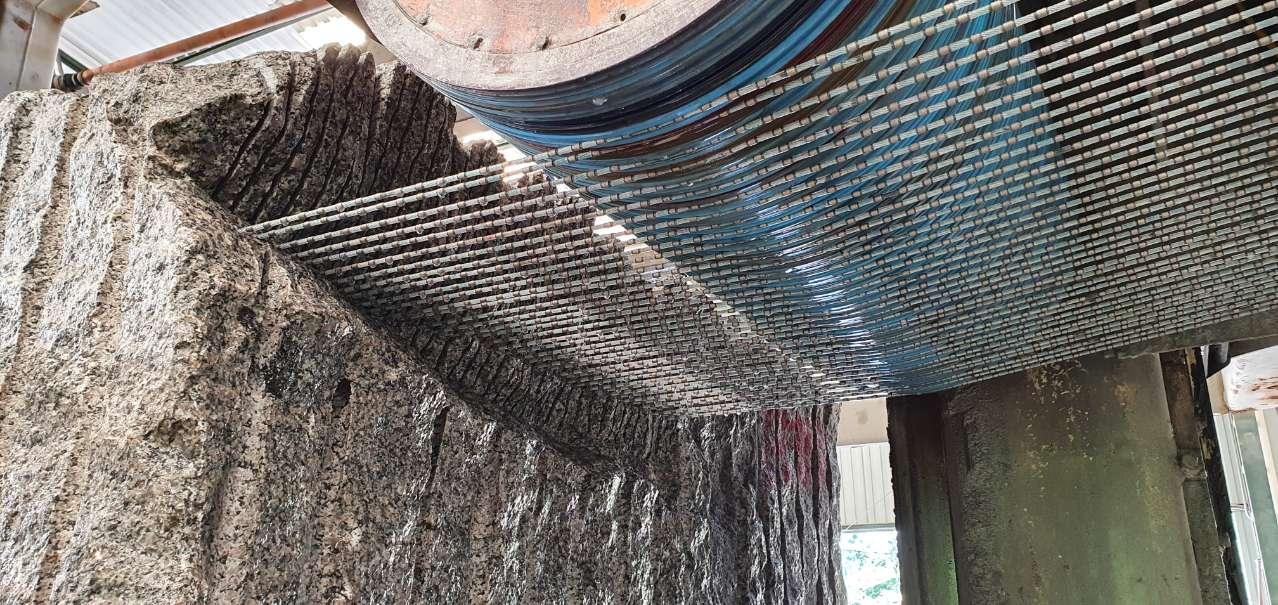
The old description names stone processing as well as bridges, posts, chimneys, reinforced concrete, steel or iron parts, nuclear reactors and underwater structures. It also states low vibration, noise and dust, adaptation to irregular shapes, and rubber assembly with springs to protect the steel cable. These broad contexts involve different cutting loads and should not be treated as one interchangeable duty.
Send the stone sample or demolition material record with the intended machine and cut geometry.
What the captured table supports
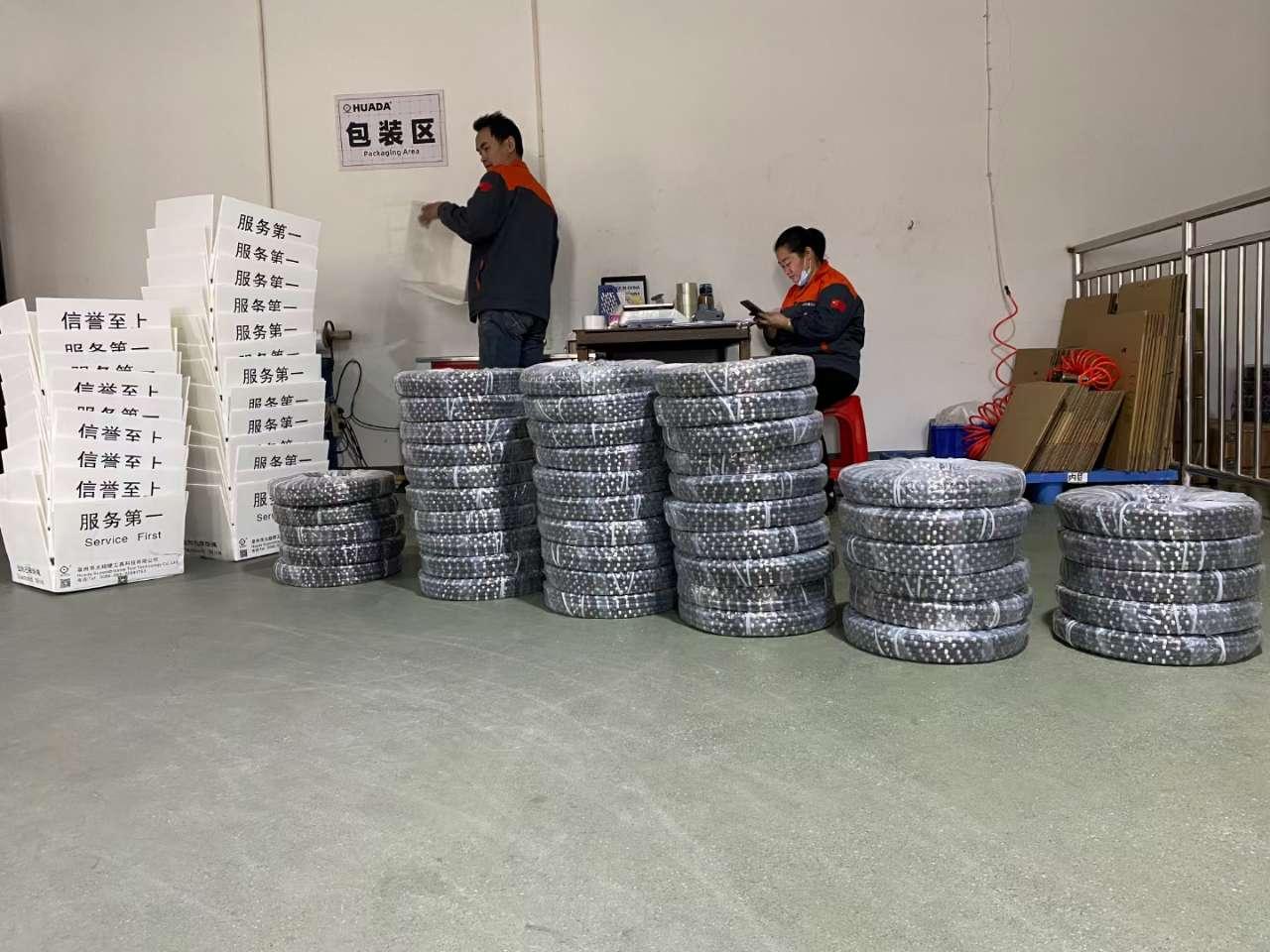
The saved parameter text contains Φ11.5, Φ11 and Φ10.5 mm diameters, bead entries of 40 and 44, and rubber-plus-spring assembly. Application labels include steel structure, reinforced concrete and normal concrete. Published cutting-speed ranges extend from 0.5–5.0 m²/h, while production ranges extend from 1.0–5.0 m²/m. The original layout does not reliably connect every captured value, so Huada should return the selected diameter, beads per metre, assembly and application together on the offer.
Evidence needed for stone processing
- Granite, marble or other stone sample
- Block size, cut direction and required finish
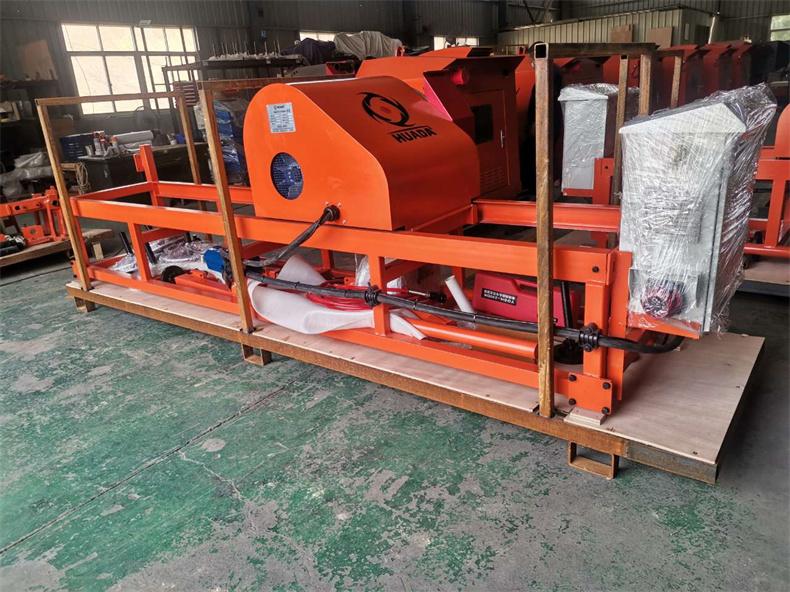
- Wire-saw model, pulley size and tension control
- Confirmed sintered-wire construction
- Trial speed, area, time and wear record
Keep construction-demolition test data separate from stone-processing results. A successful reinforced-concrete cut does not establish slab quality or production on stone, even when the rope diameter appears similar.