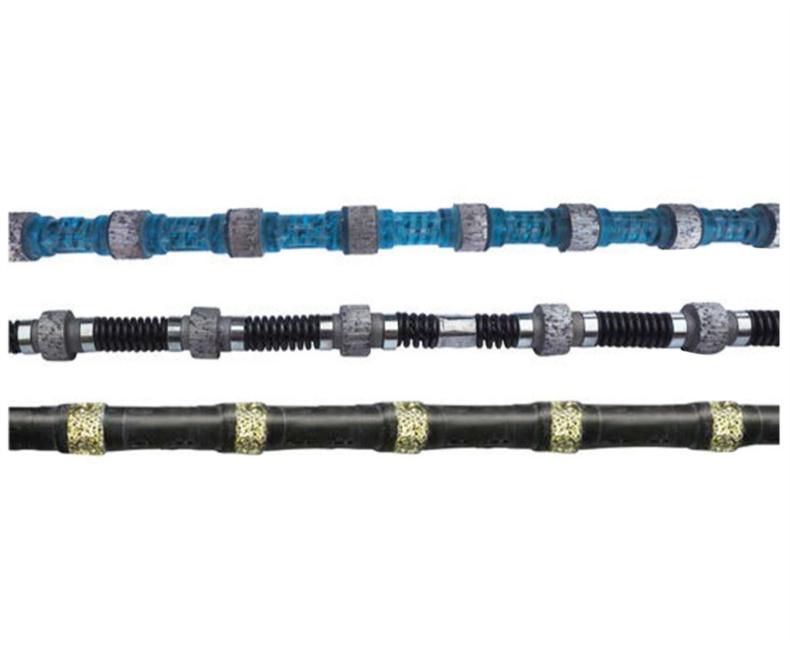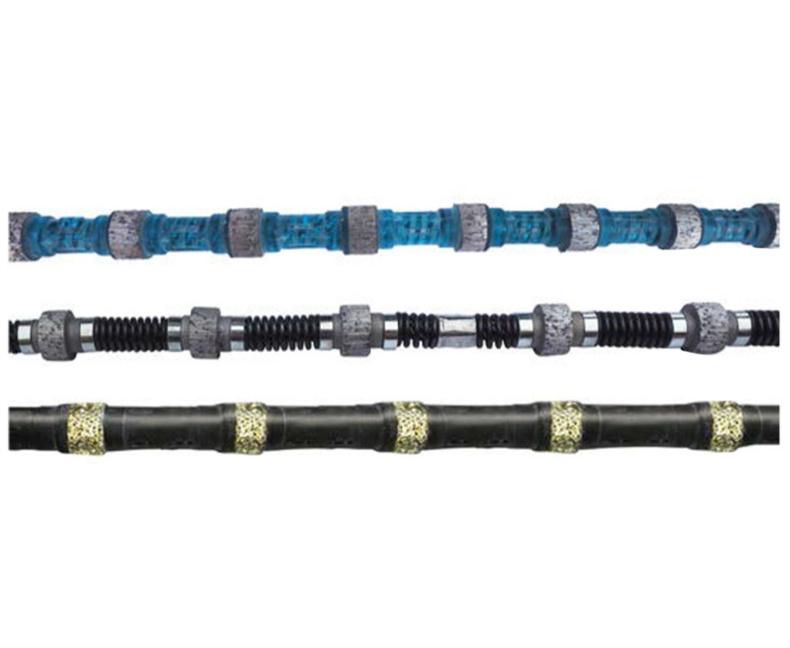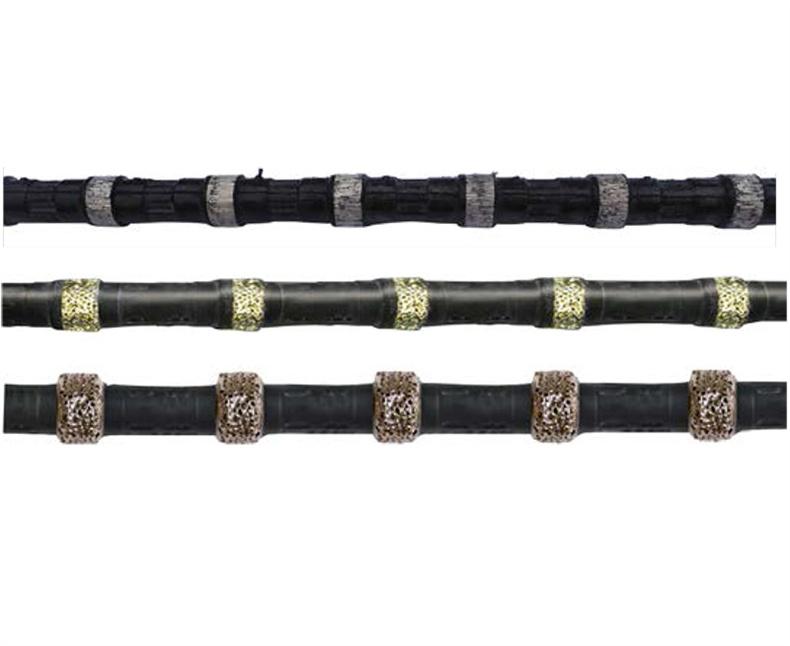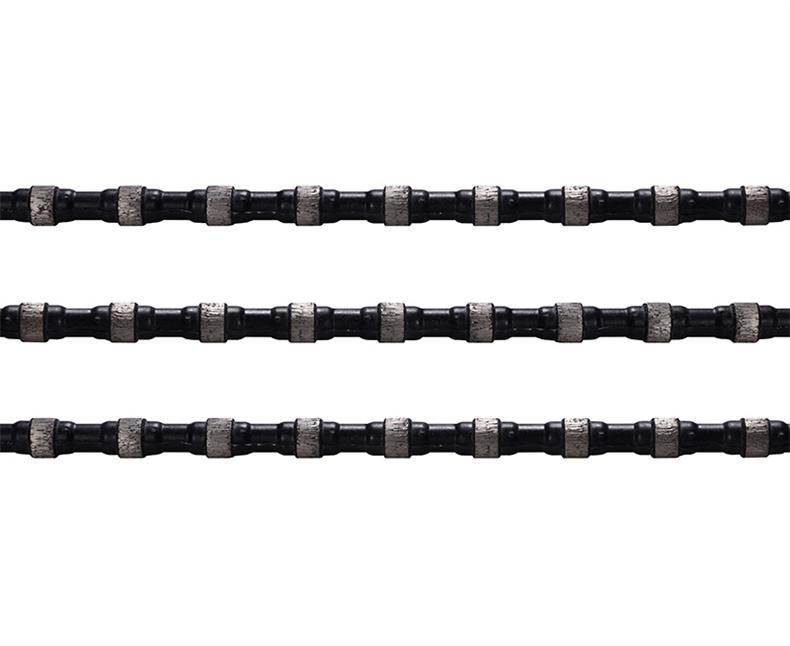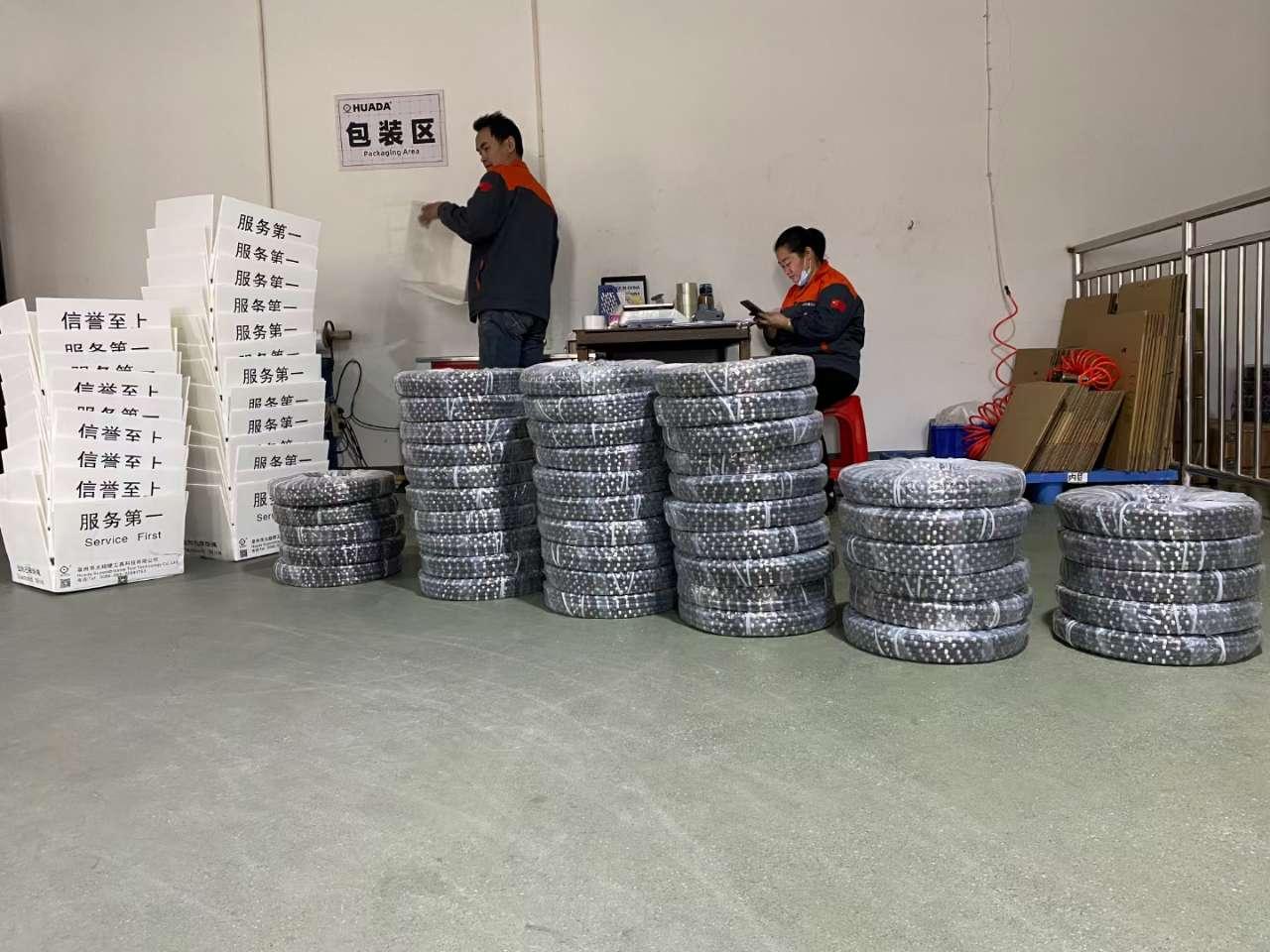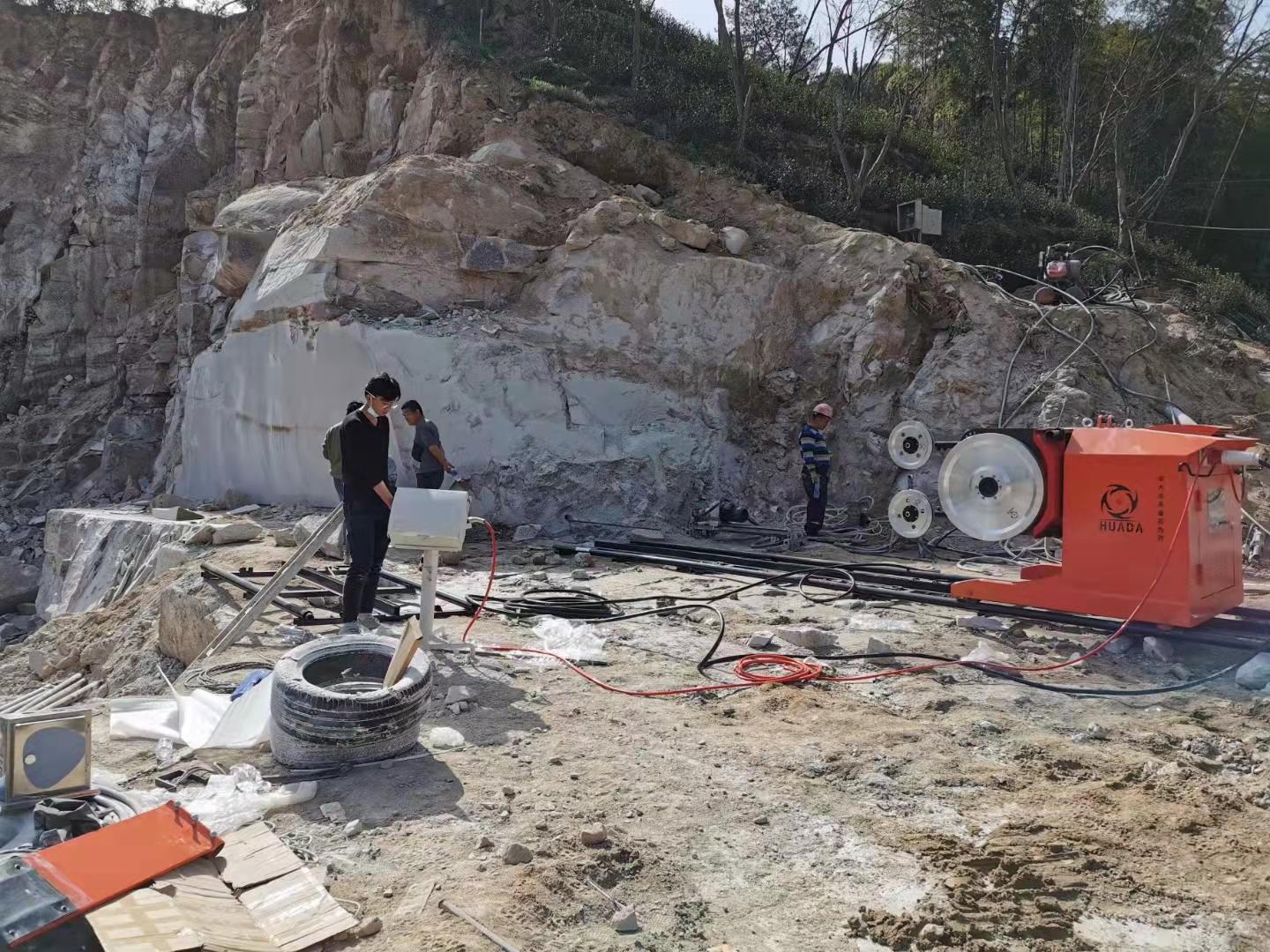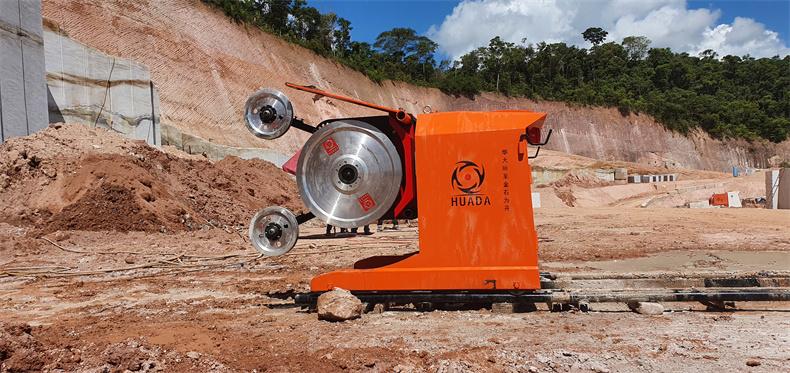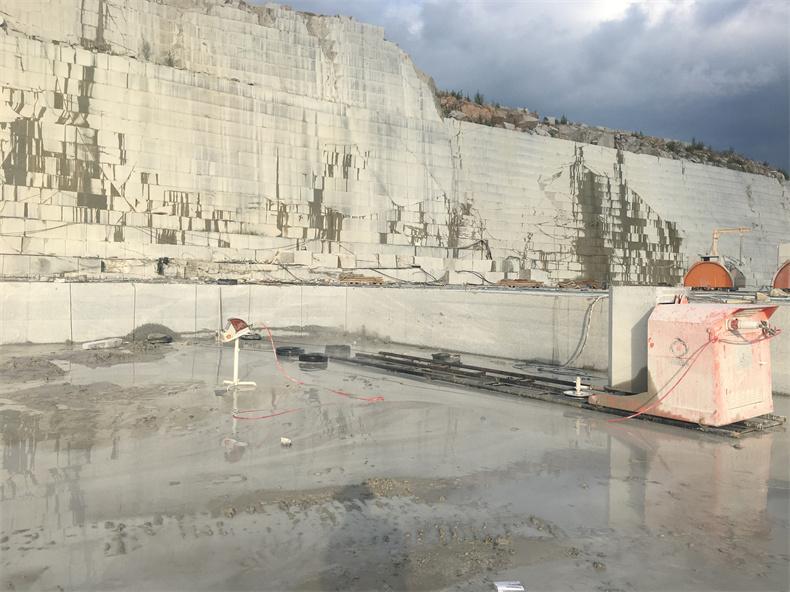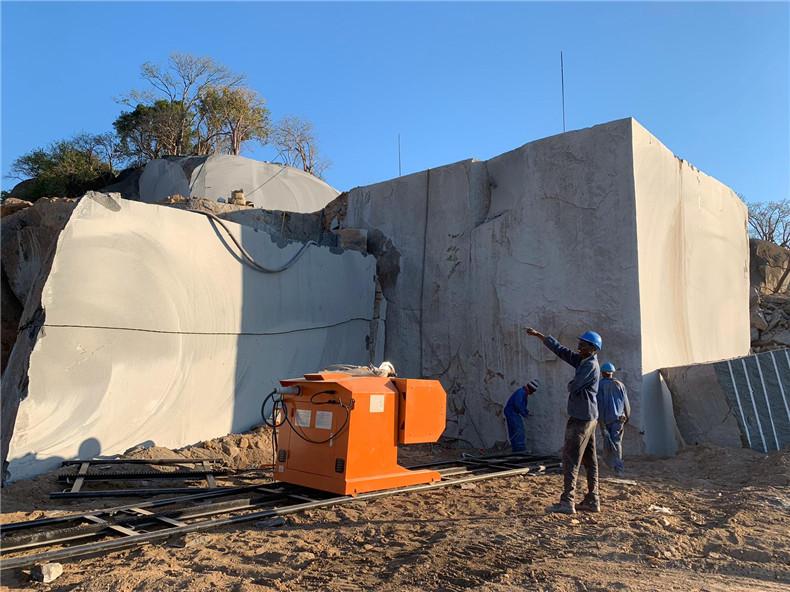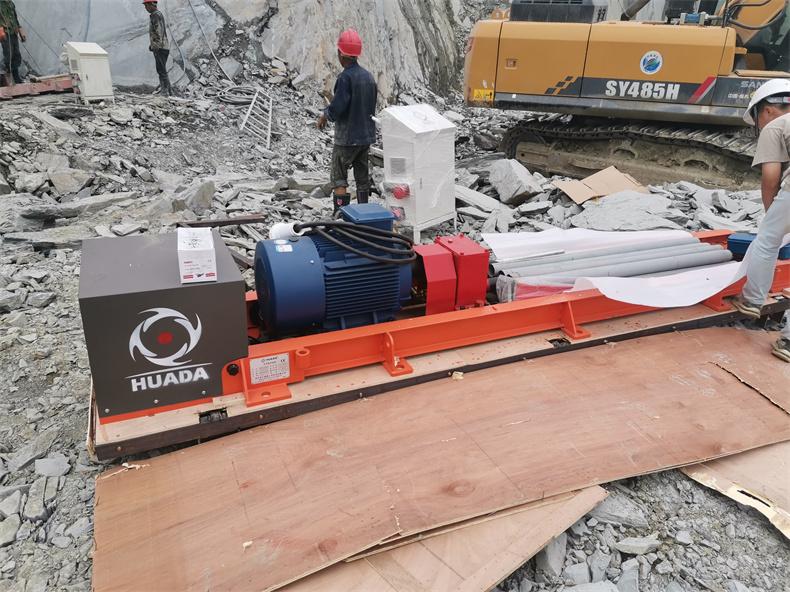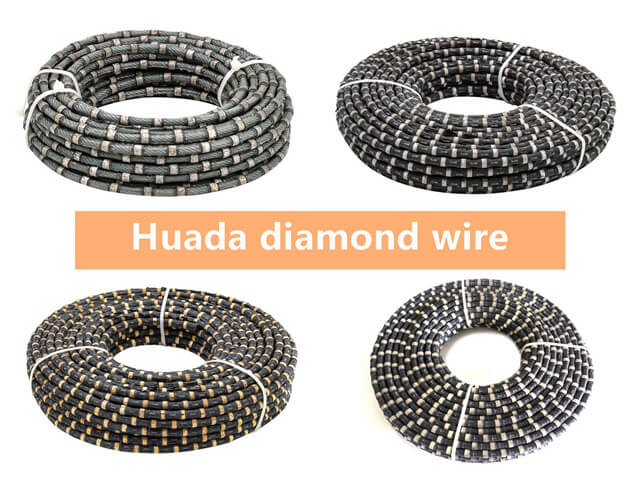

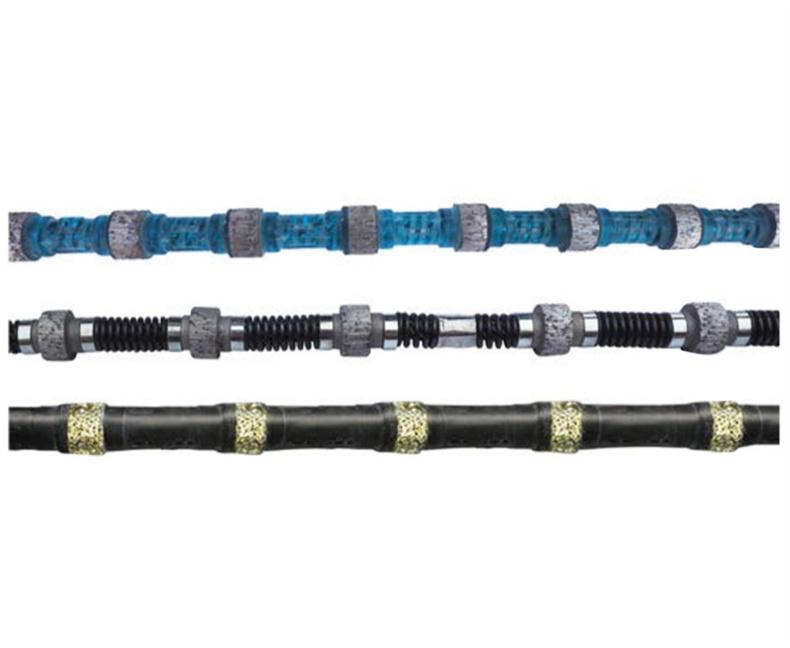
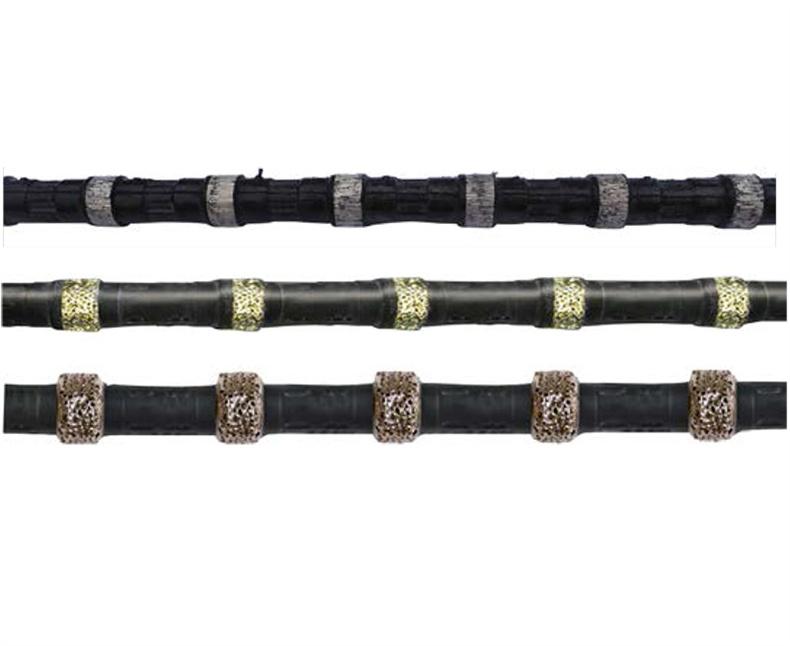
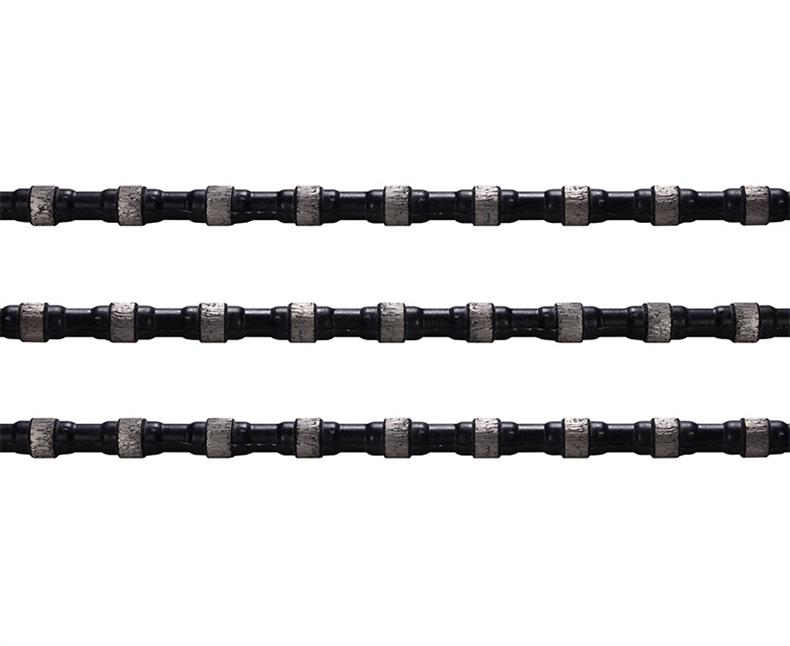
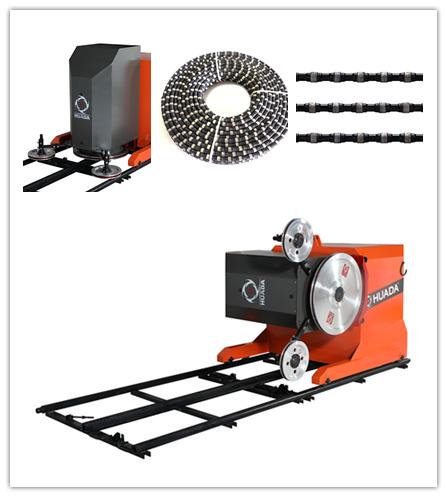
This diamond wire range is for marble quarrying. The old specification separates sintered, dry-cutting and electroplated entries and varies bead count, assembly and operating ranges with stone hardness and installed machine power.
Three wire constructions appear in the source
The sintered table lists spring, rubber-plus-spring and plastic-plus-spring assemblies. A separate dry-cutting entry uses spring assembly, while the electroplated entry lists spring and rubber-plus-spring. These are alternatives recorded for different quarry conditions, not a statement that every marble can be cut with every construction.
The old text says wire development is based on a customer stone sample. A representative sample and an existing cut record are therefore useful inputs when the quarry changes marble type or operating method.
Read hardness and machine power together
| Source group | Diameter | Beads per metre | Wire speed |
|---|---|---|---|
| Sintered | Φ10.5–Φ11.5 mm | 33 / 37 / 40 | 35–50 or 35–45 m/s by hardness |
| Dry cutting | Φ11–Φ11.5 mm | 28 / 31 / 33 | 35–45 m/s |
| Electroplated | Φ10.5–Φ11 mm | 28 / 31 / 33 | 35–45 m/s |
The full table also distinguishes the listed cutting and production ranges for 37 kW and 55/75 kW machines. Confirm which column applies to the installed saw before using a headline value.
Marble-wire selection brief
- Marble sample, quarry location and hardness or prior cutting record
- Wire-saw model and installed motor power
- Wet or proposed dry-cutting condition
- Required diameter, assembly and beads per metre
- Trial method recording speed, cut area, time and wire consumption
Original product images