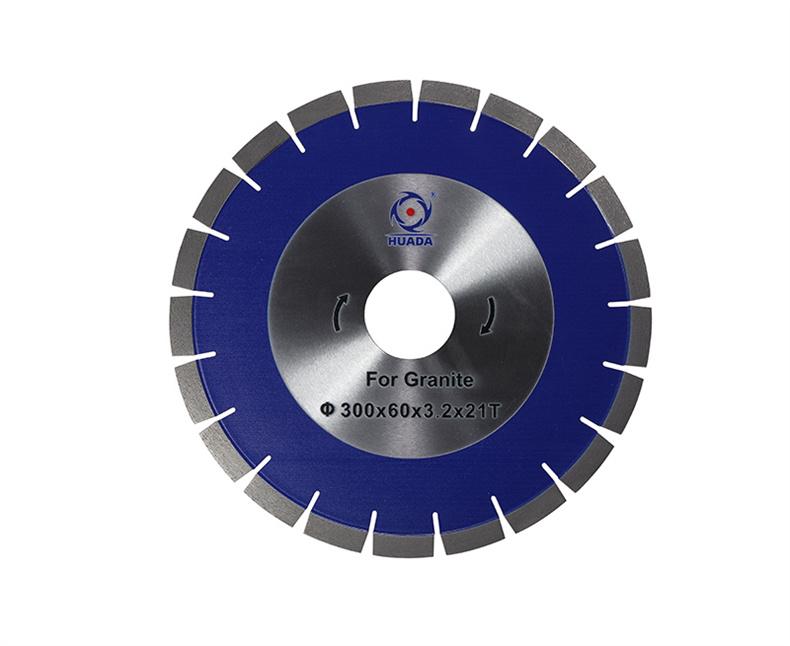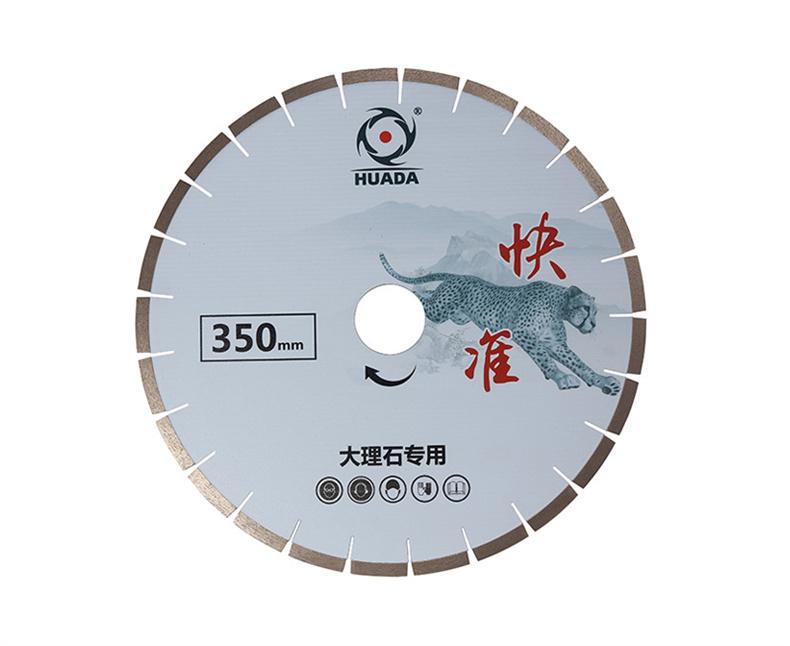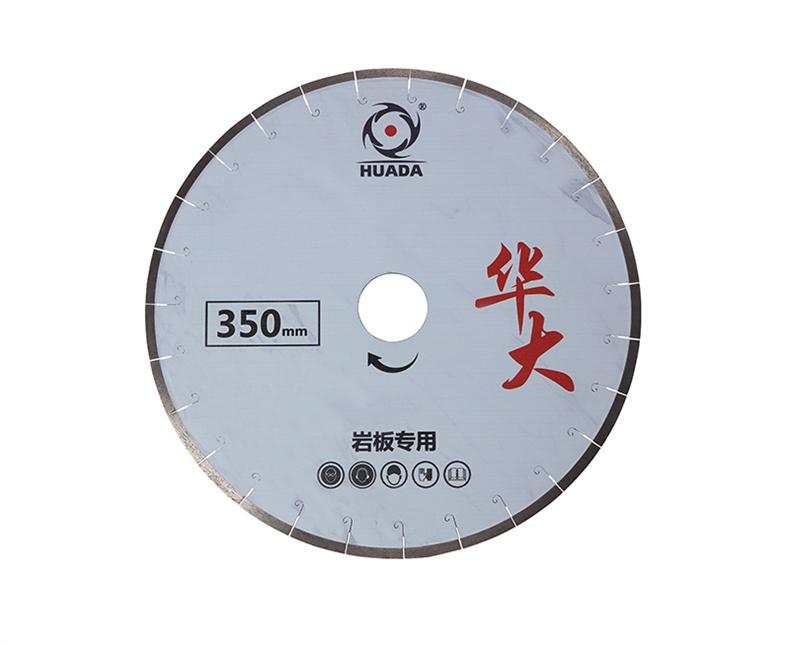

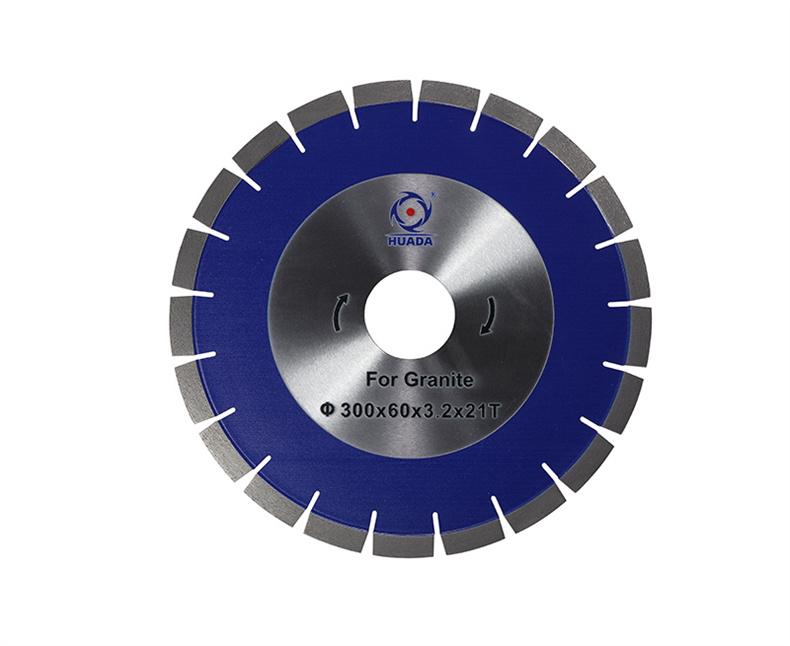
These bridge-saw blades are listed for granite slabs. The range runs from 250 to 800 mm and includes silent and regular cores, which makes it a distinct small-cutter and bridge-saw offer rather than a quarry or large-block blade.
Diameter and segment progression
| Diameter | Segment length | Width | Height options | Segment count |
|---|---|---|---|---|
| 250 mm | 40 mm | 3.0 mm | 10/12/15 mm | 17 |
| 300–400 mm | 40 mm | 3.0–3.6 mm | 10/12/15/20 mm | 21–28 |
| 450–600 mm | 40 mm | 3.8–4.6 mm | 10/12/15/20 mm | 32–42 |
| 700–800 mm | 40 mm | 5.0–5.5 mm | 10/12/15/20 mm | 50 / 46 |
The last two counts are recorded exactly as 50 and 46 in the old table. Confirm the intended count on the final drawing instead of assuming that it rises with diameter.
Choose the core and bore with the machine
Every source row lists a 50/60 mm bore and marks both silent and regular cores. Verify the bridge-saw spindle and flange before choosing between those options. Add the granite type, slab thickness and required edge quality so the supplied blade is tied to the actual cutting task.
First-production checklist
- Confirm diameter, bore, core type and rotation marking
- Inspect mounting faces and water outlets
- Record the granite slab and cut dimensions
- Use the agreed operating settings for a representative run
- Check edge chipping, blade behaviour and segment condition
Store the accepted settings with the blade reference and granite name. The record is useful when the same machine later receives another diameter or core type.
Original product images